
Marinaleda moving to another world
Marinaleda: A Utopia for Peace
In this article, you’ll find essential information about Marinaleda in the province of Seville:
- A Few Words About Marinaleda
- How It Came to Be in the Spotlight
- Where Is Marinaleda Located on the Map?
- What Sets Marinaleda Apart
- Marinaleda’s Cultural Week and Festival for Peace
- What to See Around Marinaleda
- What to Do in the Province of Seville?
- Booking Accommodations
- Some Useful Links
- The Latest Articles on Andalusia
A Few Words About Marinaleda
About 100 kilometers east of Seville, in the heart of the Andalusian countryside, Marinaleda—a self-governed village, a utopian village—is a municipality with approximately 2,800 residents.
Before you continue: if you arrive in Marinaleda after visiting the incredible towns of Carmona or Écija, you’ll be surprised by the contrast…. Likewise, the name “Marinaleda” can be misleading. In fact, the town is far from the sea and is the exact opposite of what the Marina de Benalmádena represents.

Marinaleda is surrounded by vast farmlands. It is situated in a region historically marked by large estates (latifundia) and seasonal labor.
The origins of its media attention
This small town, covering 25 km², has become known far beyond Spain’s borders for its unique economic and political structure. For several decades, it has operated according to a model based on agricultural “cooperativism,” participatory democracy, and a rejection of real estate speculation.

This experiment is inextricably linked to the figure of Juan Manuel Sánchez Gordillo, mayor from 1979 to 2023 and a member of the United Workers’ Candidacy (CUT).
Under his leadership, Marinaleda has become a symbol of an attempt at alternative economic development, while also sparking a recurring debate about the viability of this model. Its supporters highlight its social achievements; its critics point out, in particular, the significant role of public funding in the municipality’s operations.
In 2011, however, Marinaleda received approximately 6.6% less in public transfers than the average for Andalusian municipalities.
A History Marked by Social Mobilization

Marinaleda’s current model has its origins in a long series of social struggles that began in the late 1970s.
In March 1980, nearly 700 residents took part in a 13-day hunger strike to demand more resources for agricultural employment. This mobilization marked the beginning of a broad movement calling for agrarian reform and better access to land.

During the 1980s, residents organized more than a hundred occupations of agricultural estates. In 1984, they occupied the Cordobilla Dam for a month to secure irrigation for the El Humoso estate, then owned by the Duke of Infantado. The goal was to make its expropriation possible as part of the agrarian reform.
In 1991, after several years of protests, approximately 1,200 hectares of the El Humoso estate were allocated to the municipality. The land became the foundation of the local economy and was gradually cultivated by agricultural cooperatives.

In the early 1990s—particularly during preparations for the 1992 Seville World’s Fair—new protests were organized, including occupations of public buildings and occasional blockades of high-speed rail lines, the Seville airport, and even the Bank of Spain.
The demands focused on working conditions, rural employment, and the implementation of irrigation systems for these lands.
Starting in 1997, the irrigated lands enabled the cultivation of crops such as olives, artichokes, fava beans, and bell peppers. Two years later, the first processing plant opened to complete the production chain and create more local jobs.

In 2001, the Andalusian workers’ union took part in a general strike in the agricultural sector in the province of Seville. The following year, Marinaleda hosted a national gathering of the anti-globalization movement.
Since the 2023 municipal elections, Juan Manuel Sánchez Gordillo has stepped down from his position for health reasons. His successor, Sergio Gómez Reyes, from the same political party, now leads the municipality.


Where is Marinaleda located on the map?
I’m planning my trip or excursion in the province of Seville
- Book accommodation in Écija, not far from Marinaleda
- Hire a car at Seville or Malaga airport
- Book a guided tour of Écija
What Makes Marinaleda Unique

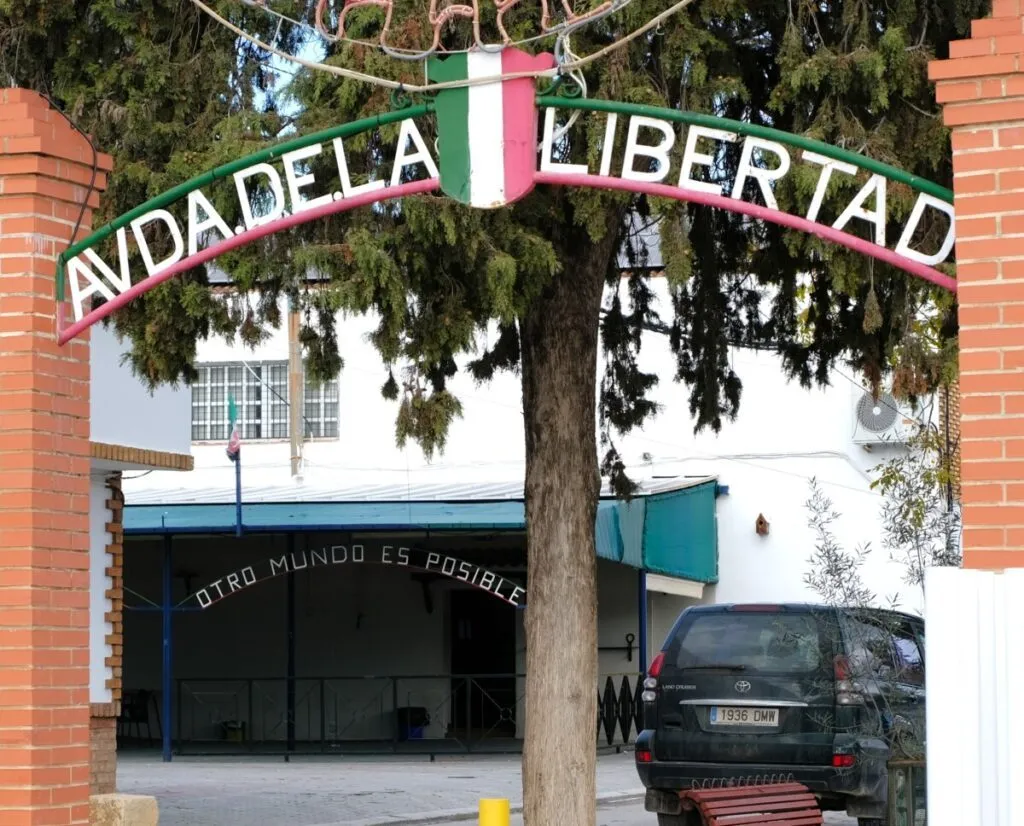
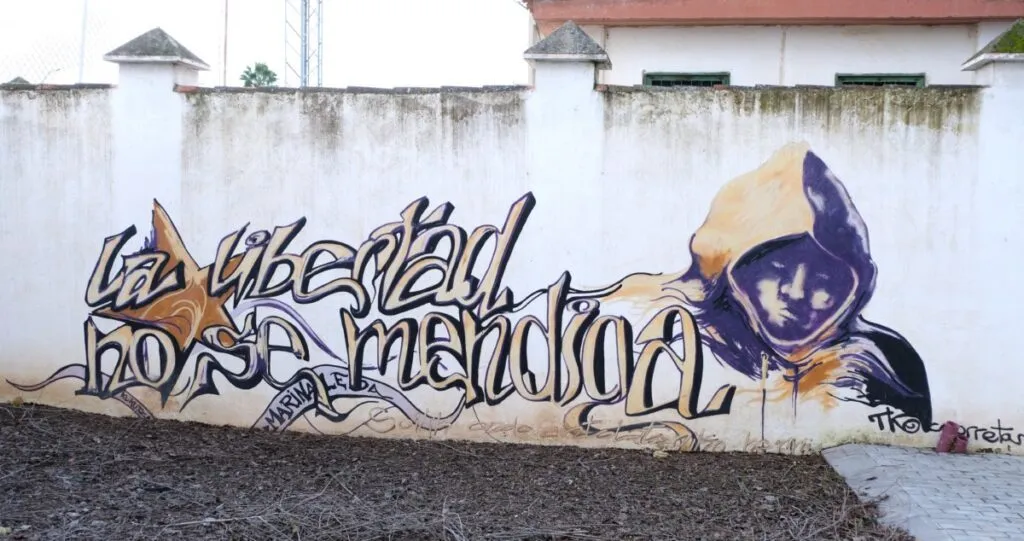
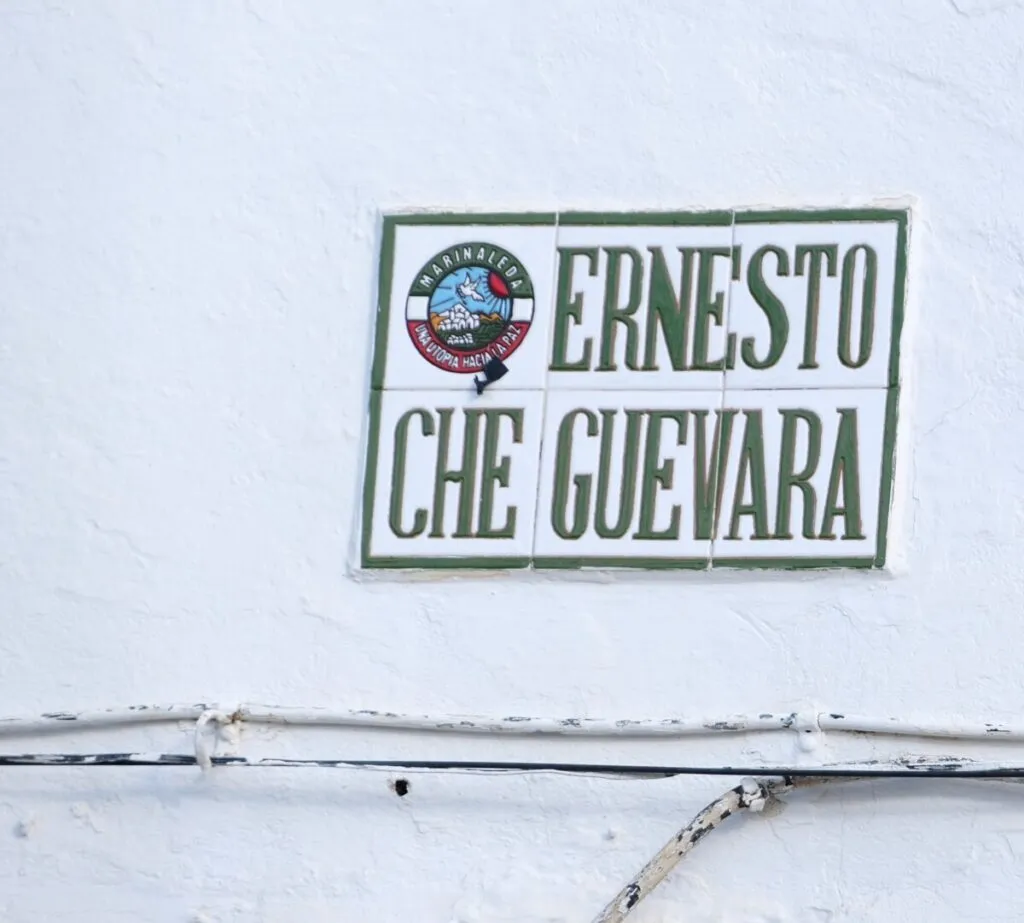
In Marinaleda, there aren’t any specific monuments to visit, but there are things to see. In particular, the messages that residents express on the town’s walls. Many walls are painted white, and residents are encouraged to express themselves, as can be seen in many of the photos in this article.
There are many unique aspects to the municipality’s governance; here are the main ones:
Housing for about 15 euros per month
Housing is provided through a self-build system. The municipality makes land available, provides technical assistance, and the future homeowners participate in the construction themselves, often as part of cooperatives.
Residents then pay a monthly fee of about 15 euros to cover development costs, as the housing is not intended for speculation.
Agricultural Cooperatives and Equal Pay
The local economy relies primarily on agriculture and the cooperatives that farm the land in El Humoso. Employees receive a standardized wage to limit income disparities.
The stated goal is to distribute work and guarantee a stable income rather than to maximize individual profits.

A Highly Developed Participatory Democracy
Major decisions concerning the community—such as the budget, urban planning, taxation, employment, and housing—are discussed at general or neighborhood assemblies directly with residents.
About a hundred meetings are held each year, with votes taken by a show of hands or, depending on the topic, by secret ballot.
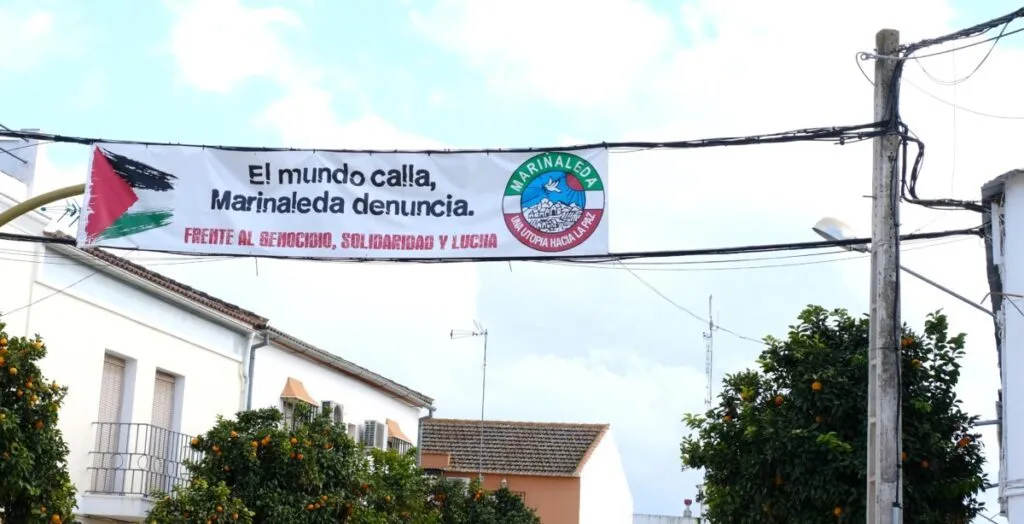
Unpaid municipal officials
For several decades, Juan Manuel Sánchez Gordillo received no salary from the town hall.
Even today, Mayor Sergio Gómez Reyes and his municipal team carry out their duties without municipal compensation; the corresponding funds are allocated to other municipal expenses.

Municipal services at nominal rates
Several public facilities are offered at very low prices to make them more accessible. The municipal daycare center costs about 12 euros per month, the gym a few euros per month, and the municipal swimming pool is available for about 1.80 euros per season.

A Municipality Free of Commercial Advertising
Commercial billboards are absent from public spaces. This decision reflects a stated commitment to limiting the private sector’s role in the municipality’s administration.
Membership in the Network of Municipalities for the Third Republic
The municipality is part of the Network of Municipalities for the Third Republic, created in 2007 to promote a debate on the establishment of a republic in Spain. The tricolor republican flag flies on several public buildings.

One final notable feature: The Marinaleda Festival for Peace
Every year, the municipality organizes a Festival for Peace, which takes place during Holy Week!
There are two religious brotherhoods that organize processions during Holy Week, but unlike the rest of Spain, no public funding is allocated for Holy Week celebrations.
The town, however, does allocate a budget to fund this festival. Some famous singers and musicians, including Manu Chao, have already come to participate in this festival.
Semana Cultural and Marinaleda’s Festival por la Paz

An Experiment That Remains a Subject of Debate
For more than forty years, Marinaleda has been a unique case in Spain. Its model—based on cooperatives, self-built housing, and direct democracy—regularly attracts researchers, journalists, and visitors.

However, this experiment is subject to differing interpretations. Some see it as a unique social experiment that has helped maintain employment and a low cost of living. Others believe that its success depends largely on public subsidies and that it would be difficult to replicate on a large scale.
Somewhere between a unique local model and a subject of political debate, Marinaleda remains an exception among Spanish municipalities.
What to See Around Marinaleda?
Ecija
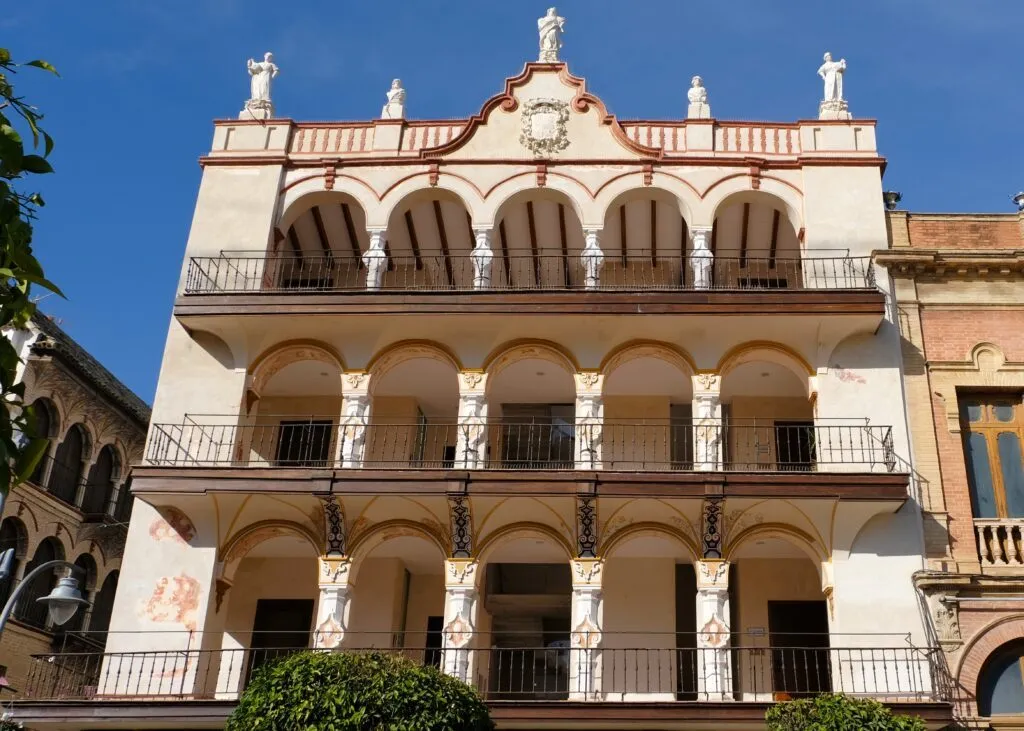
As mentioned in the introduction to the best sights in the province of Seville, you can choose to visit the famous small town of Écija, just a few kilometers away.
Carmona
Carmona, 30 km from Seville, is another town with many treasures and a history stretching back several millennia!

If you’re a fan of the history of Al-Andalus or fascinated by Roman Spain, you’ll find plenty to enjoy during your visit to Carmona.
What to do in the province of Seville?
Below are a number of ideas for activities to do in Seville and the surrounding area. You can book them online today.
Bonus: All activities can be canceled up to 24 hours before the scheduled date.
Book Accommodations
Below, you’ll find all the hotels and accommodations available in Seville after you’ve selected your dates:
Some useful links
- For those staying on the Costa del Sol and wishing to visit Andalusia, here are 9 magnificent guided tours from Malaga, Torremolinos, Fuengirola or Benalmadena.
The latest articles on Andalusia

Sierra Nevada: the complete guide to skiing in Andalusia
Discover the Sierra Nevada ski resort in Granada: slopes, lift passes, ski rentals, access, and tips for planning your trip.
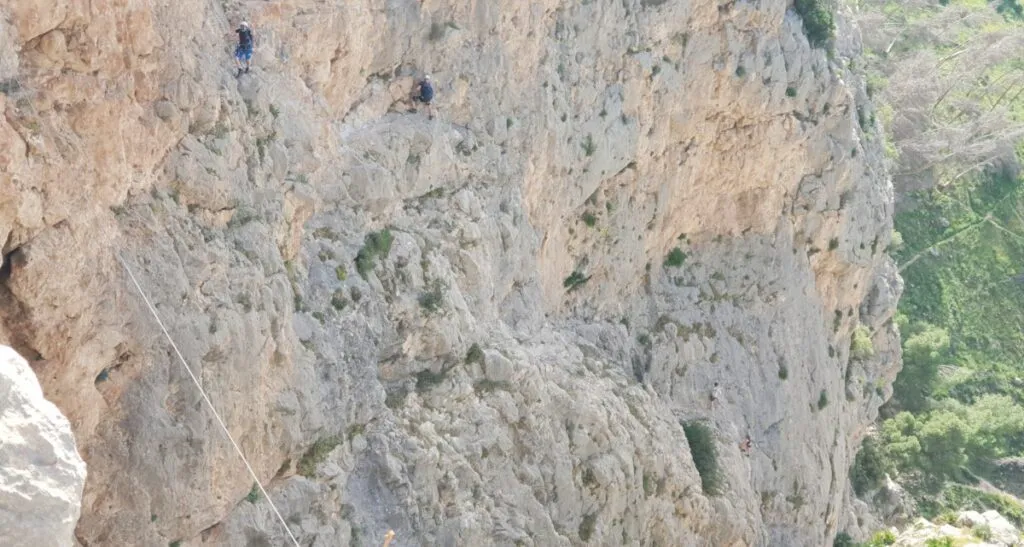
The Caminito del Rey via ferrata: an adventure in the Málaga Gorges
After your hike along the Caminito del Rey, the more adventurous among you can try the Caminito del Rey via ferrata. A unique experience.
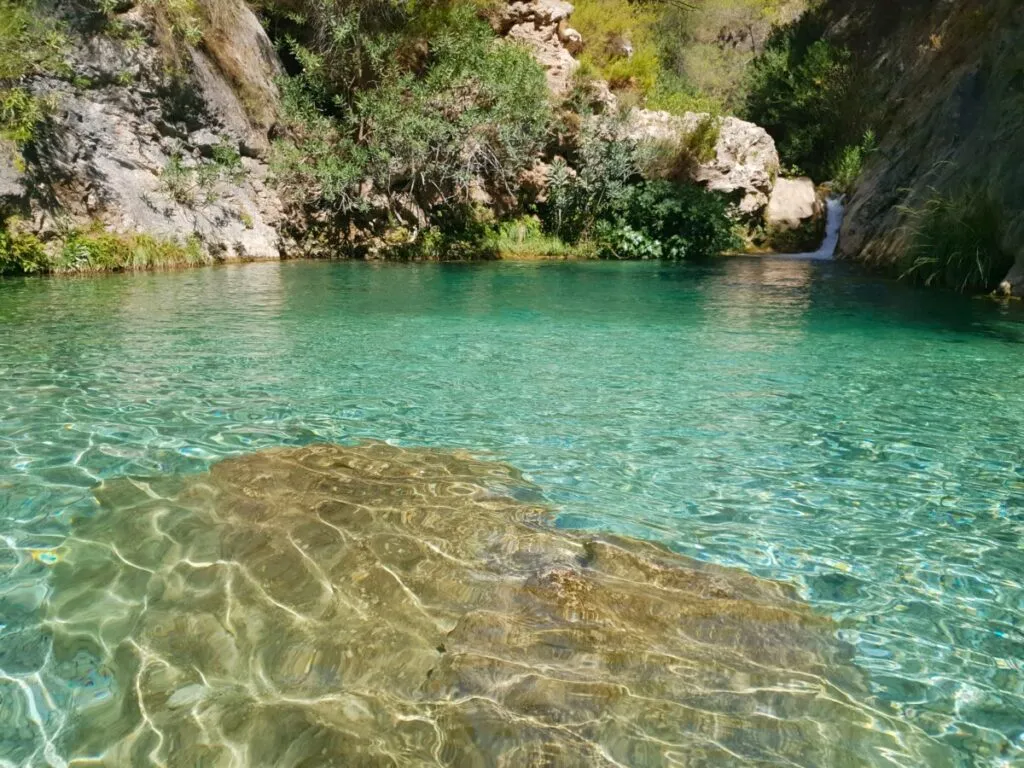
Río Verde in Andalusia : canyoning and practical information
Discover the Río Verde in Andalusia: hiking, natural pools, waterfalls and canyoning in Otívar, near Granada. An unforgettable adventure!
Best things to do in Capileira in the Alpujarra
Here’s everything you need to see and do in Capileira, in the Alpujarra, in the province of Granada, to have a wonderful time there.
