


What to do in the Realejo district of Granada
Things to see and do in the Realejo district of Granada
In this article, you’ll find essential information on what to see and do in Granada’s Realejo district and the surrounding area:
- A brief history of the Realejo and its origins
- Where is the Realejo district of Granada located on the map?
- What to see in the Realejo?
- What to do in Granada?
- Booking accommodation
- Map of the Realejo district with places to visit
- The main Feria in Granada
- What to see around Granada?
- Some useful links
- Latest articles on Andalusia

A few words about the Realejo district and its origins
The Realejo district in Granada is less touristy than the Albaicín and Sacromonte districts.
It is, however, the oldest district in modern-day Granada. It was mainly populated by Jews in the 10th century. Strolling through the streets of the Realejo is like stepping back in time, with every street corner telling a story.

Interesting fact: the neighbourhood’s 17,000 inhabitants are still known as ‘los greñúos’ – a name derived from the curly hair of the Jewish inhabitants of Garnata al yahud.

The origins of the Realejo – San Matias neighbourhood
It was the Zirids, Berbers from what is now Algeria, who founded Madinat Garnata (Granada) in 1013 when the Kingdom of Granada was established, during the Taifa period.
The historic city of Madinat Garnata is located in what is now the Albaicín district. Opposite, at that time, on the hill of La Sabika, many Jews had already settled, which would give the present-day Realejo district the name Garnata al-Yahud, the Granada of the Jews. It was at the top of this hill that the Alhambra would later be built.

This district bears the scars of history. For with the arrival of the Berber Almoravids and then the Almohads, the Jews were expelled.
Finally, during the Nasrid Kingdom of Granada, the last kingdom of Al-Andalus, and until 1492, this neighbourhood bore the name Rabad al-Fajjarin – the potters’ quarter.

Where is the Realejo district in Granada?
The Realejo – San Matías district is marked in red on the map. It lies between the Alhambra and the famous Albaicín district.
Planning my stay and my visit to the Realejo district
- Book accommodation in Granada
- Hire a car at Seville or Malaga airport
- Book a tour of the Alhambra and the Generalife
What is there to see in the Realejo district of Granada?
The Realejo, with its history and location, is one of the most authentic districts in the city of Granada.
To really explore the Realejo district, you need to take your time and wander through the narrow streets. You can reach it from the city centre or by walking down from the Alhambra via La Antequeruela.

This area is known as La Antequeruela because it took in many Muslim refugees following the conquest of Antequera by Catholic troops in 1410.
In the surrounding streets, you can admire magnificent cármenes (old bourgeois houses) and whitewashed houses. Here are the main sights to see in the Realejo:
1 – Puerta de Bibbarambla – Bab al-Ramla –
2 – The Carmen of the Martyrs
3 – Campo del Príncipe, the heart of the neighbourhood
4 – The Cuarto Real de Santo Domingo
5 – Church of Santo Domingo
6 – Casa de los Tiros Museum
7 – Manuel de Falla House-Museum
8 – The house of José María Rodríguez Acosta
9 – Church of San Cecilio
10 – The Convent of the Comendadoras de Santiago
11 – The wash house
12 – Sephardic Museum of Granada
13 – The statue of Yehuda Ibn Tibon
14 – Plaza de Isabel la Católica
15 – The street art of El Niño de las Pinturas
Note: further down in the article there is a map showing the locations of the places mentioned.
Note 2: There is a guide offering a guided tour of this neighbourhood, focusing on the street art, as well as the Sacromonte district with its cave houses.
1 – Puerta de Bibbarambla – Bab al-Ramla –

This is an ancient gate that once stood in the centre of Granada, right next to the Zacatín and the Alcaicería (the old souk).
2 – The Carmen de los Mártires
The Carmen de los Mártires is a famous carmen and garden in Granada. It is situated right next to the walls of the Alhambra. Covering more than seven hectares, it is the largest of the city’s carmenes. It features a magnificent small palace:

as well as romantic gardens and Nasrid vegetable gardens overlooking the city of Granada. It also offers extraordinary panoramic views of the Sierra Nevada, the Vega and the city.

3 – Campo del Príncipe, the neighbourhood’s nerve centre
It was formerly known as Campo de Abulnest or Campo de la Loma in Muslim Granada, as it was an area of vegetable gardens and orchards. It later became the venue for medieval tournaments and games.
In 1497, the Catholic Monarchs enlarged the square and named it Campo del Príncipe in honour of the marriage of their son, Prince Juan of Aragon, to Doña Margarita of Austria.

Today it is a well-known meeting place for the people of Granada, particularly on important dates such as Holy Week.
Indeed, on Good Friday, prayers are held there before the Lord of Favours. This monument, the Cristo de los Favores, was erected in 1682. It is the object of great popular devotion.

If you are lucky enough to be here on Good Friday at three o’clock in the afternoon, you can join the crowd that gathers every year at this time around the crucified Christ, who, according to popular belief, grants three favours or wishes to all who ask him for them.
The recurrence of the number three is no coincidence: Jesus died at the Roman ‘ninth hour’, at three o’clock in the afternoon, and the people of Greñúos believe that the statue depicts Christ three minutes before his death.
4 – The Cuarto Real de Santo Domingo
The Cuarto Real de Santo Domingo has only recently been opened to the public and is well worth a visit. It is a former palace from the Almohad period that bore the name Dar al-Bayda (الدار البيضاء), meaning ‘White House’. Whilst some of the ornamentation may bring to mind the Alhambra, the Cuarto Real is older than the Alhambra.
Within this palace stood a Qoubba (a cubic mausoleum topped with a dome) built in the 13th century and an almunia (a pleasure garden).
Finally, this palace belonged to Aixa, the mother of Boabdil, the last king of the Kingdom of Granada, until 1492.
5 – Church of Santo Domingo

This church is located very close to the Cuarto Real. Its trompe-l’œil on the façade gives this church a special touch. In the square, there is a statue of Fray Luis de Granada, which adds to the unique atmosphere of this small, unassuming church in Realejo.

6 – Museum of the Casa de los Tiros
This small ethnographic centre traces the history of the town.

The building is also a magnificent house that conceals intriguing details such as the inscription on the façade: ‘El corazón manda’ (The heart rules).

7 – Manuel de Falla House-Museum
You can visit the Manuel de Falla House-Museum. It is a magnificent house painted blue, containing all the mementoes of the great composer from before his departure from Spain.

It was in this neighbourhood that many 20th-century artists from Granada (with the exception of Lorca) chose to build their homes and studios.
8 – The house of José María Rodríguez Acosta
Here is the house of another artist who, at the turn of the century, had an impressive, eclectic white building constructed, visible from every corner of the Realejo.

This blend of styles, complete with gardens and mazes, makes it one of the most surprising sights to visit in the Realejo. Furthermore, you can enjoy magnificent panoramic views of Granada.
9 – Church of San Cecilio
This church was built in the early 16th century on the site of an ancient Mozarabic church erected during the Al-Andalus period. The church features a magnificent Plateresque-style façade.

According to historians, the site was originally occupied by a synagogue. Finally, the Church of San Cecilio is dedicated to the patron saint of Granada, the city’s first bishop, who is honoured on 1 February with a procession through the neighbourhood.
10 – The Convent of the Comendadoras de Santiago
This was the first women’s monastery in the city of Granada following its conquest.

Today, it is also the starting point of the Mozarabic Way to Santiago de Compostela. Any self-respecting pilgrim must begin the 1,123-kilometre journey from the Nasrid capital to Compostela right here.

In this convent, you can buy mantecados (small butter biscuits) made by the nuns. You can also have lunch in the convent if you book in advance!
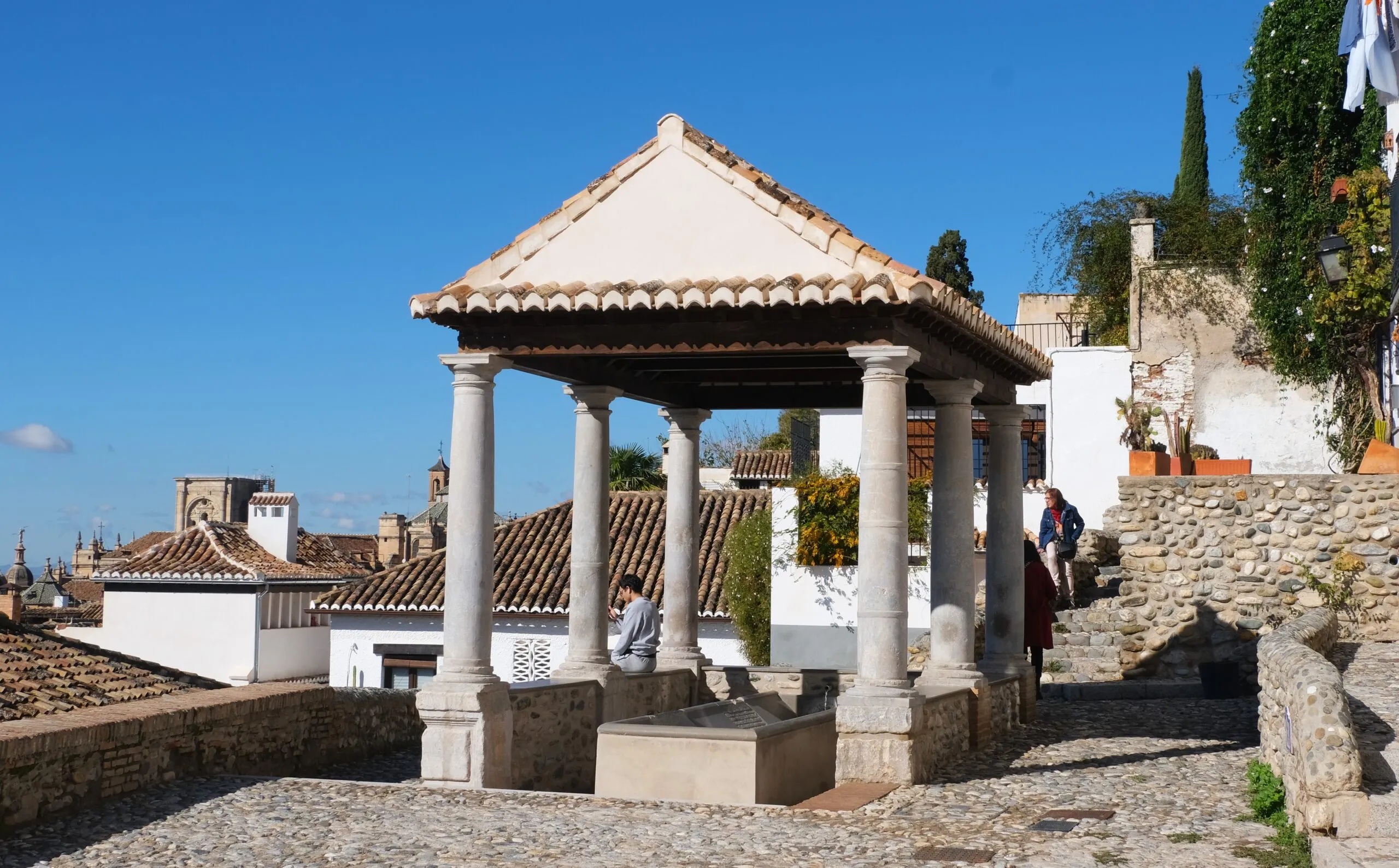
11 – The wash house
It is situated on a former gate in the Zirid wall, on the Puerta del Sol.
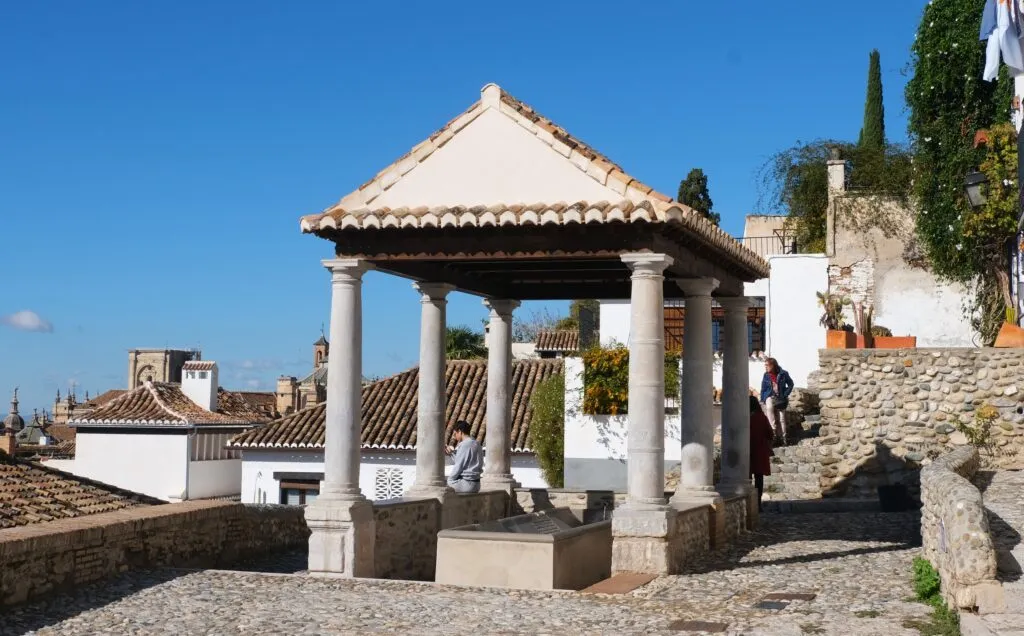
This charming old wash house dates from the 17th century. It was the hub of women’s life in the Realejo. It is the last remaining wash house in Granada.
Not far from there, you can enjoy magnificent views of Granada.

12 – Sephardic Museum of Granada
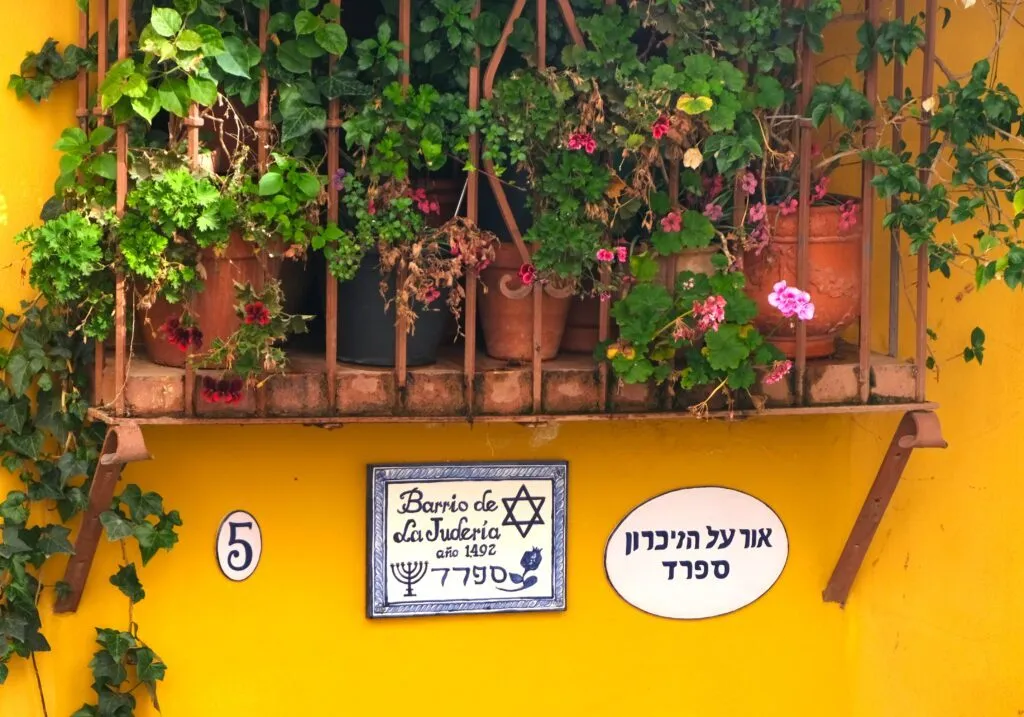
This museum is one of the most moving places to visit in the Realejo district. It is situated on Cuesta Berrocal. It is dedicated to the memory of the Sephardic Jewish community.

Among the illustrious Jews who lived on this hill was Semuel ibn Nagrella, known as ha-Naguid (in Hebrew: שמואל הלוי בן יוסף הנגיד; in Arabic: أبو إسحاق إسماعيل بن النغريلة, Abu Ishaq Ismail bin Naghrillah). He was a great poet, a philosopher and a renowned translator. He was even appointed vizier (minister) during the Taifa kingdom of Granada in the 11th century.
13 – The statue of Yehuda Ibn Tibon
He is one of the most famous Jews from Granada. Yehuda Ibn Tibon was a doctor, philosopher and poet. He was also a translator, rendering Arabic texts into Hebrew.
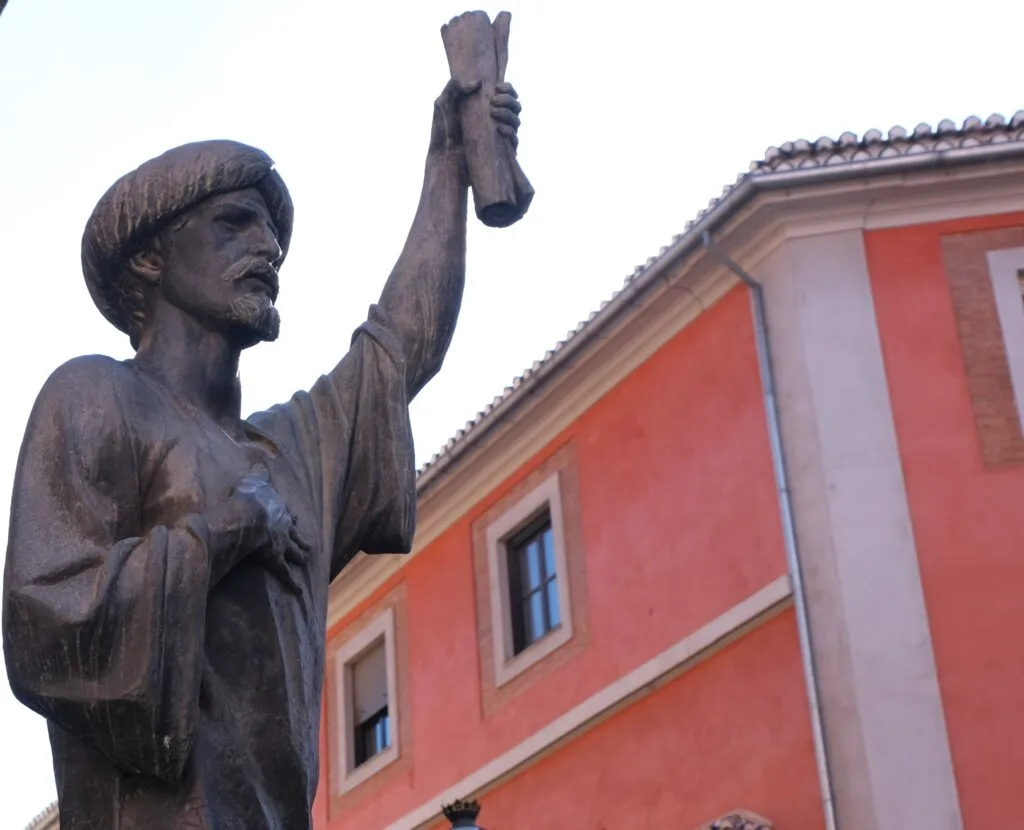
It was thanks to his translations, amongst other things, that access to Arabic science in Europe was made easier.
14 – Plaza de Isabel la Católica
In this square stands a large sculpture. It depicts Christopher Columbus asking Isabella the Catholic for funding for his voyage to the Indies.
15 – The street art of El Niño de las Pinturas

As you stroll through the neighbourhood, you’ll discover one of the modern gems of the Realejo. This is the street art of El Niño de las Pinturas (Raúl Ruiz), an artist originally from Granada.

Where can you see them: in Pavaneras, Molinos and Santiago streets.
In conclusion, a visit to Granada’s Realejo district is a truly enchanting experience. The advantage of this neighbourhood is that it is less touristy than others, allowing for a more immersive experience. Finally, if you wish, and to round off the day, you can book a hammam in the centre of Granada. These Arab baths are absolutely stunning!
What to do in Granada?
Below you’ll find a number of ideas for things to do in Granada. You can book them online today.
Bonus: all activities can be cancelled up to 24 hours before the scheduled date.
Book accommodation
Below, you will find all the hotels and accommodation available in Granada, once you have selected your dates:
A map of the Realejo district in Granada, showing the places of interest mentioned in the article
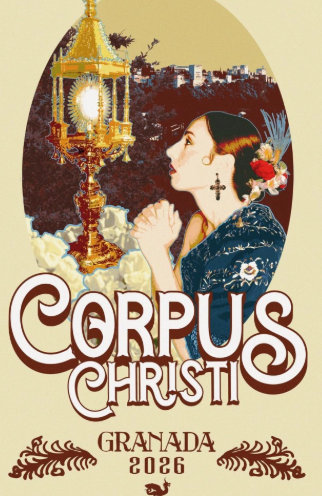
The main Granada Feria in June
What is there to see around Granada?
The province of Granada is brimming with treasures waiting to be discovered. Right on the doorstep, of course, is the Sierra Nevada ski resort. It is just 30 km from the city centre.
Places to visit around Granada include:
The village of Montefrío
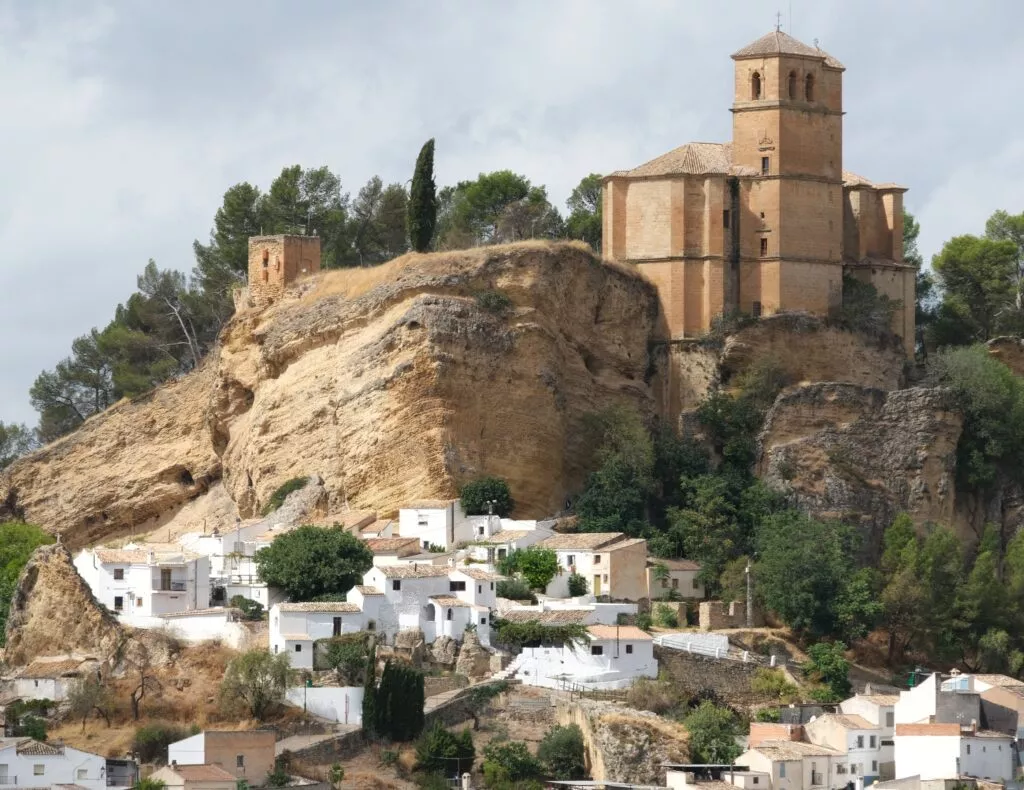
This village is absolutely beautiful. During your visit to Montefrío, you can enjoy truly spectacular views, one of which is listed among the most beautiful in the world by National Geographic magazine.
The villages of the Alpujarra
The Alpujarra region at the foot of the Sierra Nevada is home to typical, authentic villages. In fact, four villages (Pampaneira, Bubión, Capileira and Trévelez) feature on the list of Spain’s most beautiful villages.
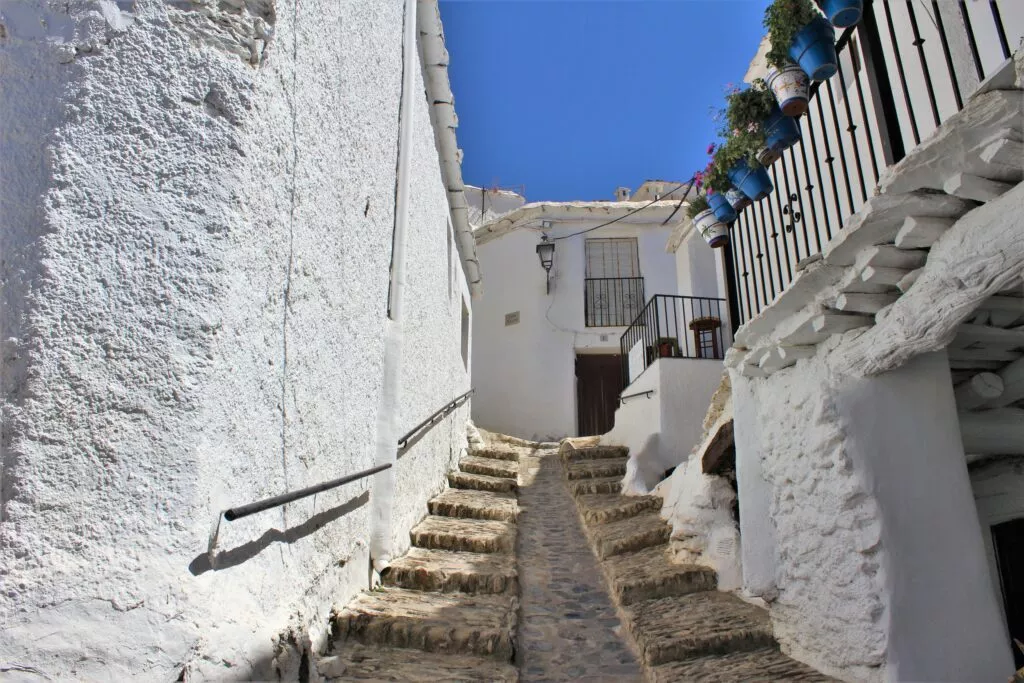
If you haven’t been there yet, I invite you to spend a day in the villages of the Alpujarras; you won’t be disappointed by the beauty of the villages and the landscapes.
Watch the fish auction in the port of Motril

Watching the fish auction in the port is a wonderful experience if you’re visiting Motril.
Some useful links
- For those staying on the Costa del Sol and wishing to visit Andalusia, here are 9 magnificent guided tours from Malaga, Torremolinos, Fuengirola or Benalmadena.
The latest articles on Andalusia
Marinaleda moving to another world
Here’s everything you need to see and know about Marinaleda, this Andalusian village in the province of Seville, and its political project.
Best things to do in Capileira in the Alpujarra
Here’s everything you need to see and do in Capileira, in the Alpujarra, in the province of Granada, to have a wonderful time there.
All best things to do in Ejica in Seville Province
You will find essential information on what to do and see in Ecija. Don’t miss the best things to do and see during your stay.

What to do in Pampaneira? With best places to visit
Here is everything you need to see and do in Pampaneira, in the Alpujarra, to make your trip there a wonderful experience.
