


On the road of the Sephardim: a journey through Andalusia in the footsteps of Jewish memory
A self-paced tour of the Sephardic heritage in Andalusia
In this article, you’ll find all the information you need to discover the wonderful sites along the Sephardic route in Andalusia:
- A few words about Andalusia and the word Sephardic
- 8 sites to immerse yourself in the history of the Sephardim in Andalusia
- Map of Andalusia with Sephardic sites to visit
- Useful links
- Latest articles on authentic Andalusia
A few words about Andalusia and the word Sephardic
This time, we’re leaving aside the most unusual places in Andalusia and the route of the most beautiful white villages. We’re going to discover Sephardic Andalusia and its heritage.
We will attempt to highlight the cultural, architectural, spiritual and gastronomic heritage of the Jewish communities of Andalusia during the Middle Ages.
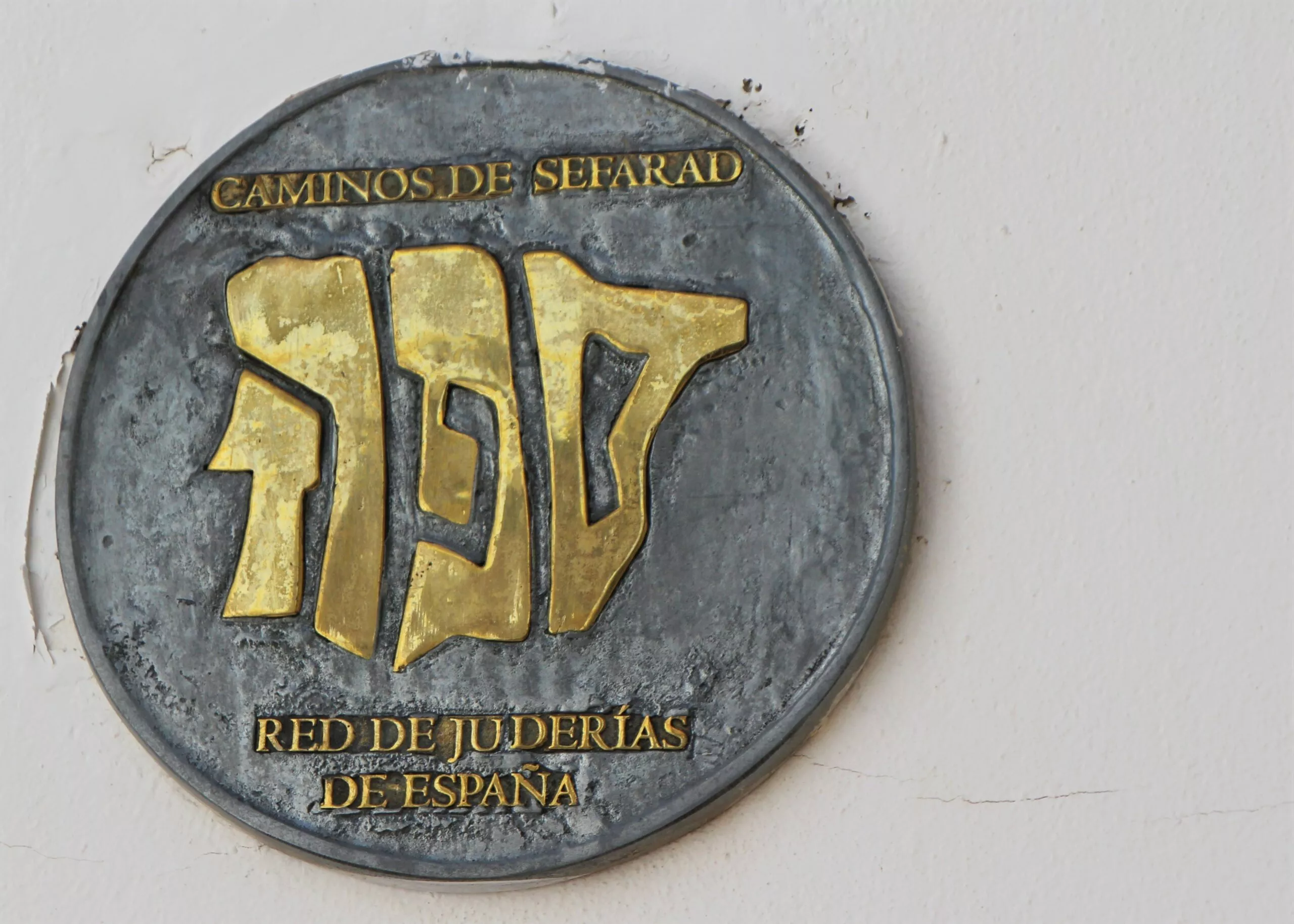
“Sefarad”
Before exploring the proposed sites in detail, if you have 3 minutes for a first – musical – immersion, I invite you to listen to the beginning of Yasmin Levy’s album with the track “No tengo lugar”.
8 sites to immerse yourself in the history of the Sephardim in Andalusia
Here is a list of 8 places to visit in Andalusia, where you can follow the Sephardic path and experience some great emotions:
- Cordoba
- Lucena
- Seville
- Vejer de la Frontera
- Malaga
- Granada
- Jaen
- Ubeda
Cordoba
Córdoba is undoubtedly the ideal city to start this route through the Sephardic heritage of Andalusia.
As in other Spanish cities, Cordoba’s Jewish quarter is called Juderia. This quarter has existed for around 1,000 years. Its origins date back to the time of Al-Andalus, when Cordoba was known as Qurtuba. Below, the Juderia behind the Puerta de Almodovar.
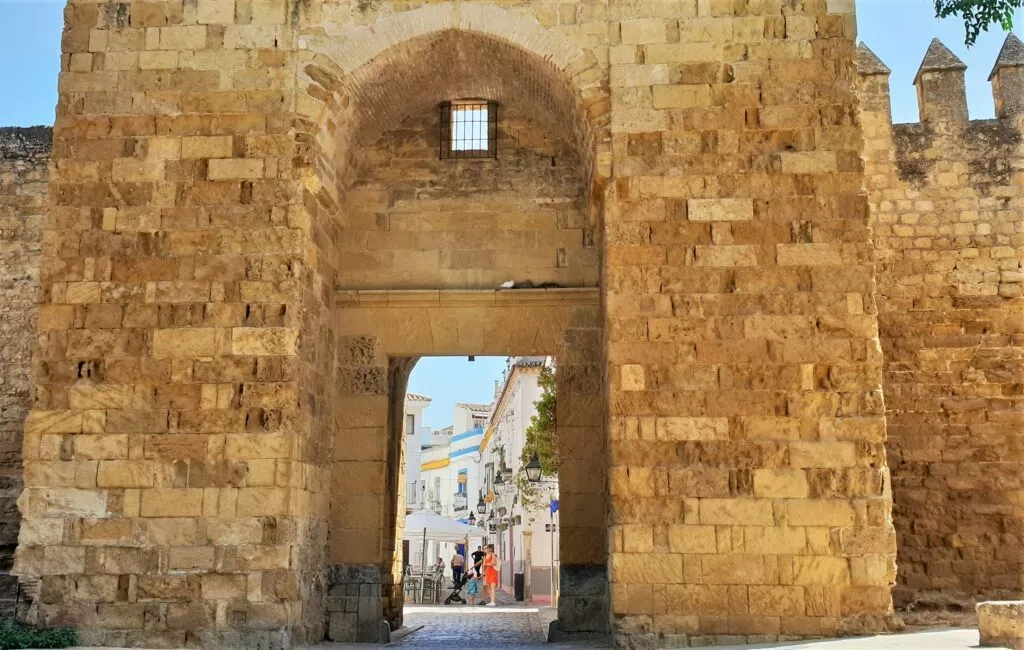
La juderia
The Sephardic community quarter extends inside the city walls, from the Puerta de Almodovar to the Mezquita, and south to the Alcázar of the Catholic Kings. It is made up of a multitude of narrow streets. It’s a pleasure to wander through these alleys, hoping to get lost in time…
At the heart of this district is the Judería synagogue.
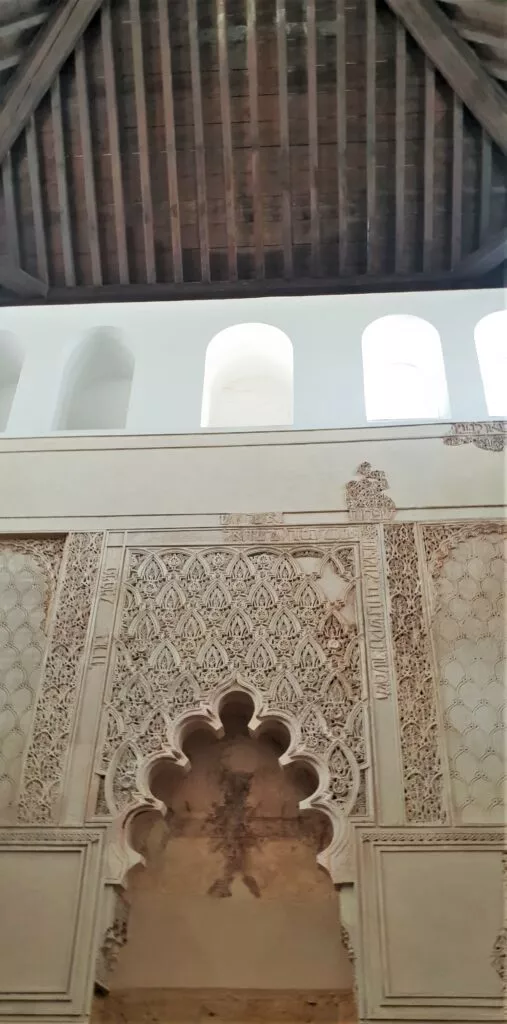
This synagogue is of particular importance as it is the only one in Andalusia still standing in its current state, dating back to medieval times. It was built in the 14th century, in 1315. The synagogue is Mudejar in style.
The women’s room is on the first floor, above the entrance patio. This synagogue, located on Calle de los Judios, boasts extensive stucco decoration.
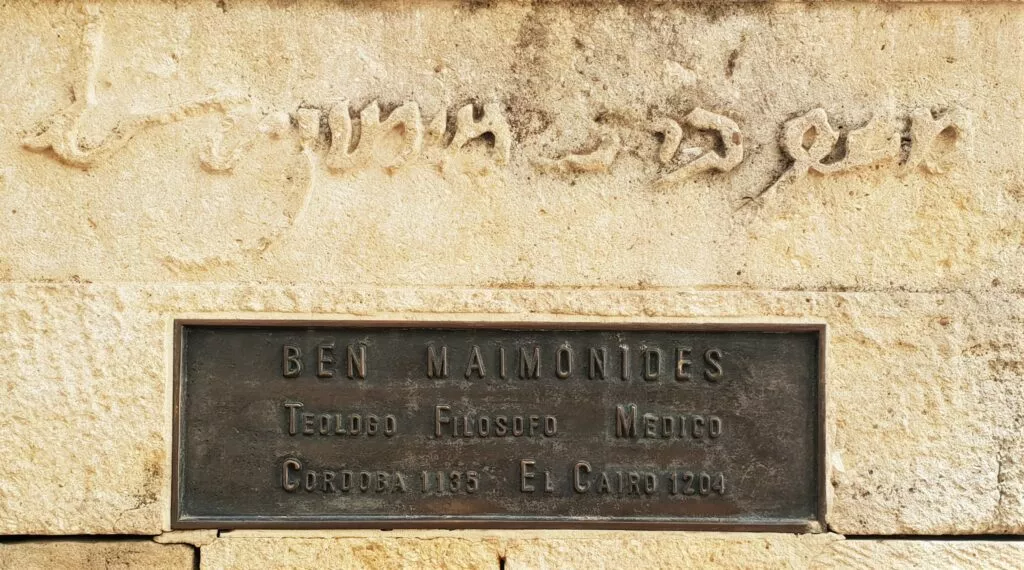
There is also the Plaza de Tiberiade, with its statue of Maimonides, not to be missed.
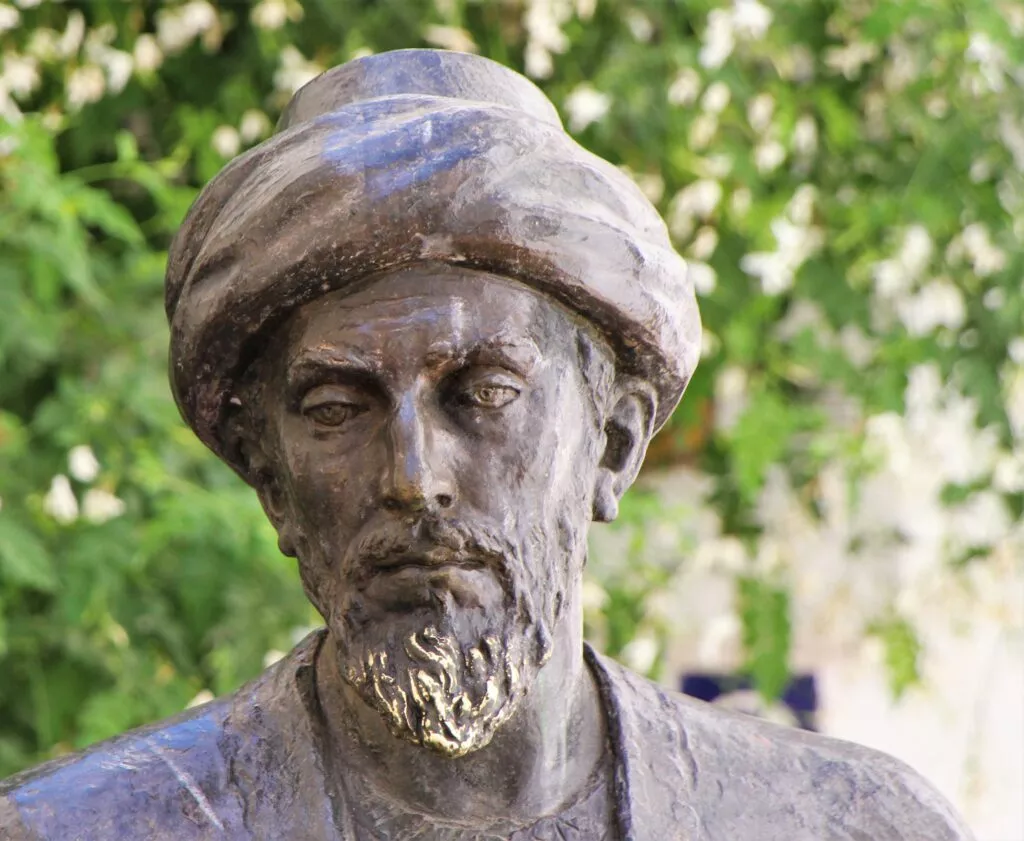
A few words about this famous philosopher, rabbi, theologian, legislator and judge, physicist, astronomer and doctor:
- Moshe ben Maimonides was born in Cordoba in 1135, at that time under the rule of the Almoravids, a Berber dynasty. His family bore the name Ibn Abdallah and had been members of the Cordoba rabbinical court for seven generations.
- The name Maimonides is found in various forms: Moshe ben Maimon, RaMBam, an acronym for Rabbi Moses ben Maimon, Moses Maimonides, Abu Imran Moussa ibn Maimoun ibn Abdallah al-Kourtoubi al-Yahoudi
Finally, the Casa de Sefarad is also of great interest.
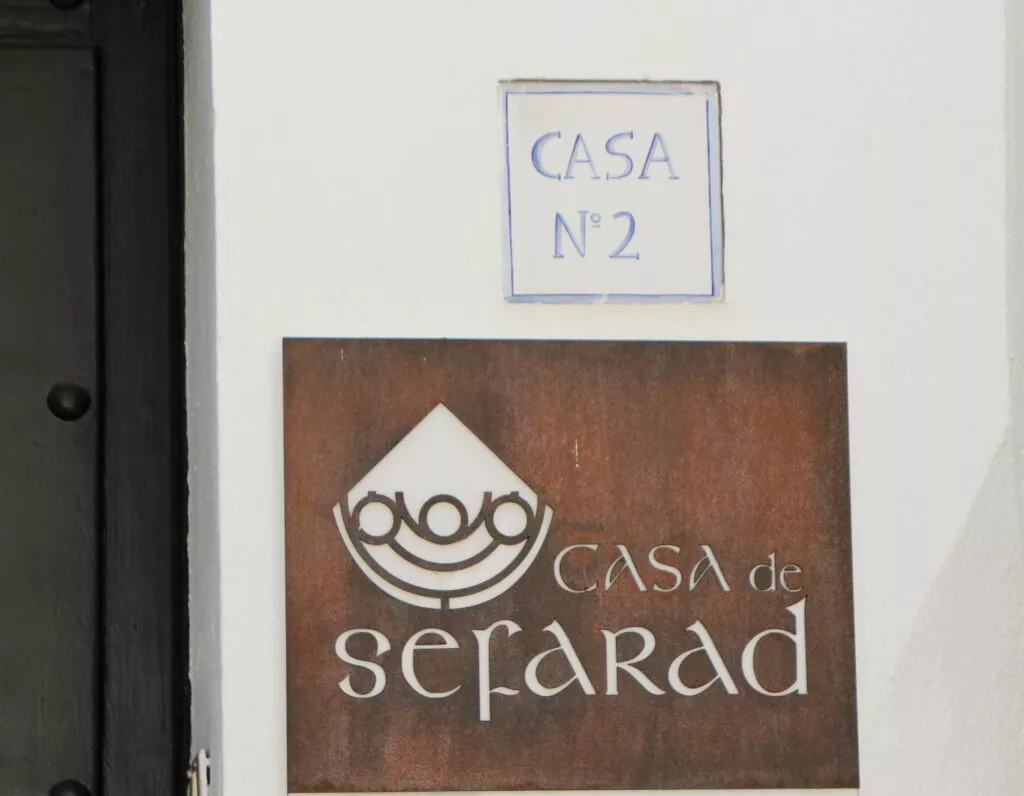
It is a cultural centre and museum dedicated to the history and memory of Sephardic Jews. It has a permanent exhibition. Its cultural activities aim to preserve the memory of Spanish Jewish identity.
For lunch: the Casa Mazal restaurant
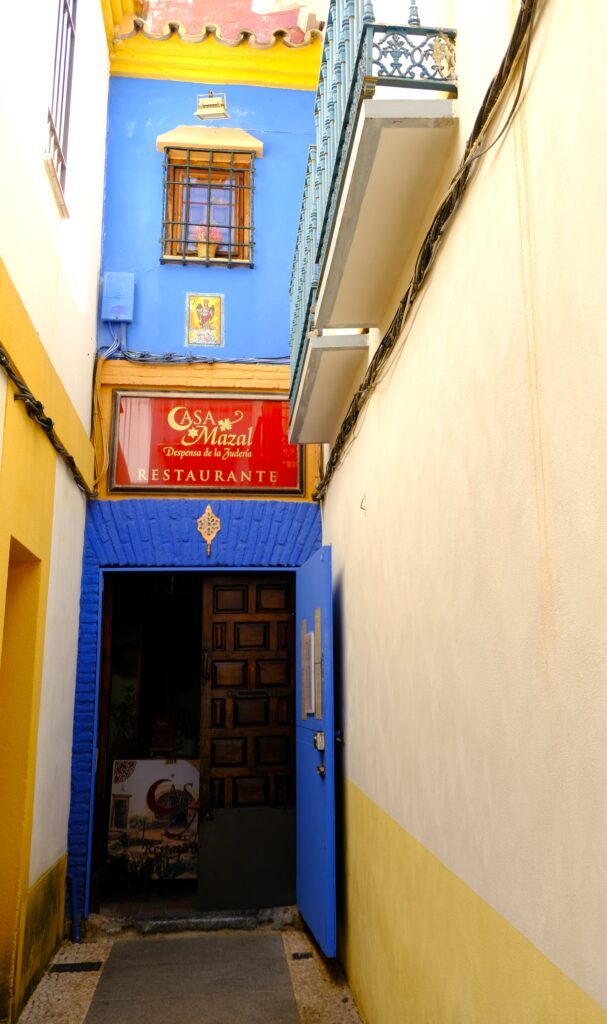
This restaurant serves dishes such as Cuscús, Baba Ganoush, Falafels, Hummus and Tarta de almendra sefardí. Some dishes are served cashers, such as ‘Kemia de zanahorias’ or ‘Shushuka’.
Note: some traditional Andalusian dishes have Sephardic roots, such as Puchero: lamb stew with chickpeas. There are also honey doughnuts (buñuelos, pestiños), desserts shared by Jews and Muslims (and often found in Morocco too).
Lucena – The Pearl of the Sephardim
Lucena, in the province of Cordoba, occupies a special place in history.
Known as the ‘Pearl of the Sephardim’, 80% of the population of Lucena was Jewish in the 11th century. In addition to this curiosity, the town was administratively independent. It is said that the town was administered almost entirely by Jewish rabbis and intellectuals in its heyday.
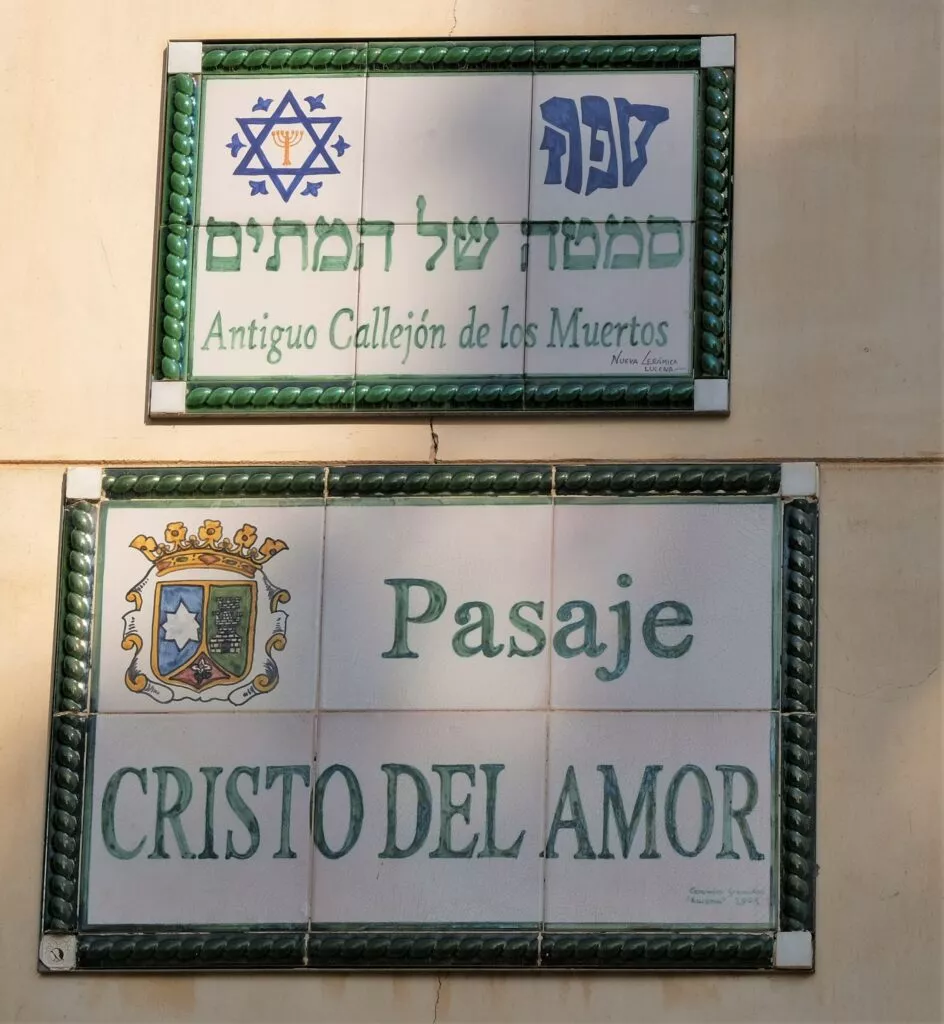
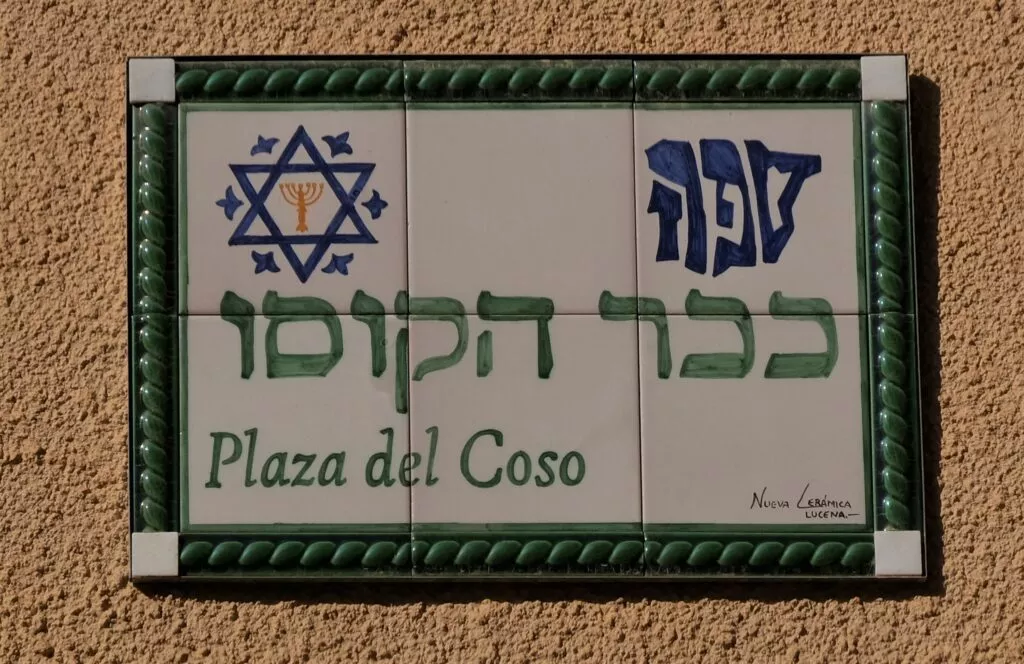
The evolution of the town’s name perfectly illustrates the historical past of this incredible city. The name comes from the Hebrew Eli ossana, אלי הושענא, meaning ‘God keep us’, or Eliossana. It was by this name that the Jews called it. With the Muslim occupation, the city would take the name اليشانة, Al-Yussana.
Under Al-Andalus, there was a Yeshiva – academy of Talmudic studies – attended by scholars such as Joseph ibn Migash, Judah Halevi and Maimonides.
Note 1: It was Isaac Al-Fasi, a Moroccan who spent most of his life in Morocco, who went into exile in Andalusia in 1088 and founded this centre for Talmudic studies a year later in Lucena.
Below is a photo of the Casa de la Mora, where you can read several Ladino writings, often expressions or quotations.
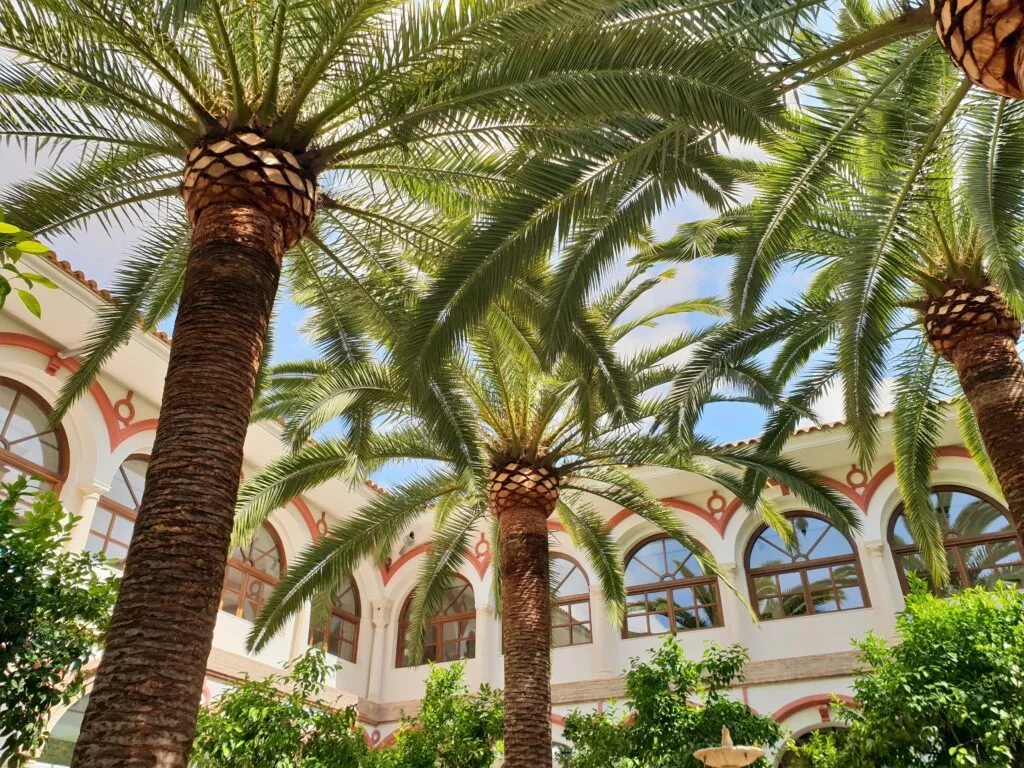
Note 2: Jewish and Muslim chroniclers of the Middle Ages called it the city of the Jews between the 9th and 12th centuries. To put this period into perspective, it was during the Caliphate of Cordoba and the first period of the Taifas.
Things to see in Lucena:
The church of San Mateo is a must-see in Lucena.
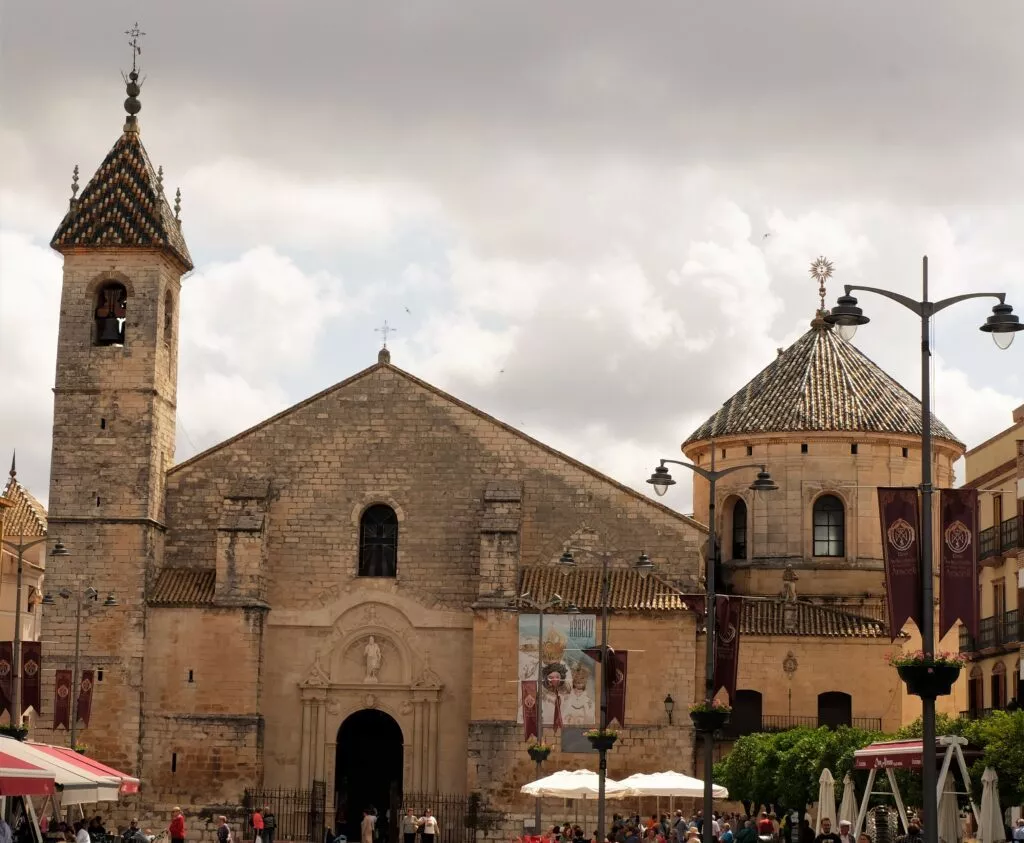
This building is a former synagogue, transformed into a mosque by the Almohads and then into a church dedicated to the cult of Saint Matthew.
Around this building was the medina, inhabited exclusively by Jews. Although the walls have been removed, the layout of the streets still reflects the structure of the period.
The Lucena Jewish necropolis, an incredible place to see in Lucena
This necropolis was only recently discovered, in 2006, during construction work on a bypass at the entrance to the town!
A photo of the entrance to the necropolis:
This is where the tombstone of Rabbi Lactosus, a giant (for the time) of 2.13 metres, was discovered. His tombstone is on display at the Castle del Moral archaeological museum in town.
This is the largest Jewish necropolis in Spain and the only one open to visitors. You’ll find the opening hours below:
Food in Lucena
- Tresculturas Restaurant: The menu often features dishes based on nuts, honey, and eggplant, including classics like bolos lucentinos or roña de habicholones.
All that’s left to do is say… in Ladino: Kome kon gana!
- Confitería Cañadas Pastry Shop
It’s located on El Peso Street, 11. You’ll find several pastries such as Haman’s ears, Egyptian pastries, and Sephardic stars.
An unusual place: the Bereshit hair salon in Lucena (Peluqueria Shekinah y Bereshit). Francisco Carrasco runs a hair salon but is also the president of the Lucena Bet Alfasi association.
The hair salon is located on Calle Feria, 1. The place could almost serve as a small museum.
And if you have the opportunity, listen to the Elí Hossana Choir:
And if you have the opportunity, listen to the Elí Hossana Choir:
It’s a group of singers, all a cappella, who do absolutely remarkable work, covering Renaissance classics, Mozarabic mass chants, as well as classics from the Sephardic song and melodies repertoire.
Here is a link to their website: Coro de Camara Elí Hoshaná.
Some songs, such as Arvoles Yoran, Rahelica, Puncha Puncha, and Komo la Roza, are sung in Ladino (Judeo-Spanish).
The Jewish Quarter and the Sephardim of Seville
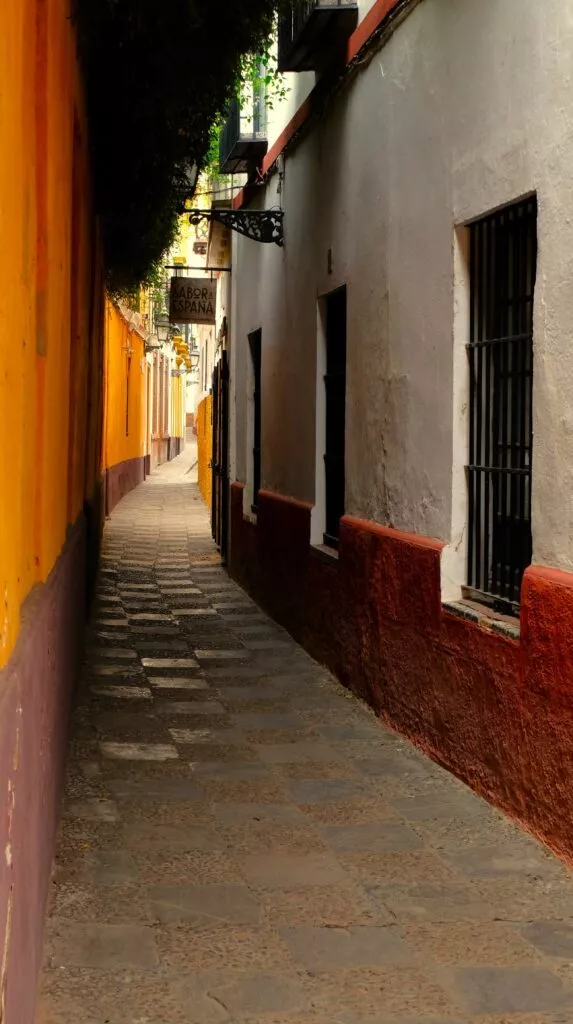
The Jewish Quarter of Seville is a historic district of the city, located in the heart of the old town. This is one of the oldest neighborhoods. It is a historic and picturesque district located in the heart of the city, historically divided between the Santa Cruz and San Bartolomé districts.
This tour will be an opportunity to discover and appreciate Spain’s Sephardic heritage.
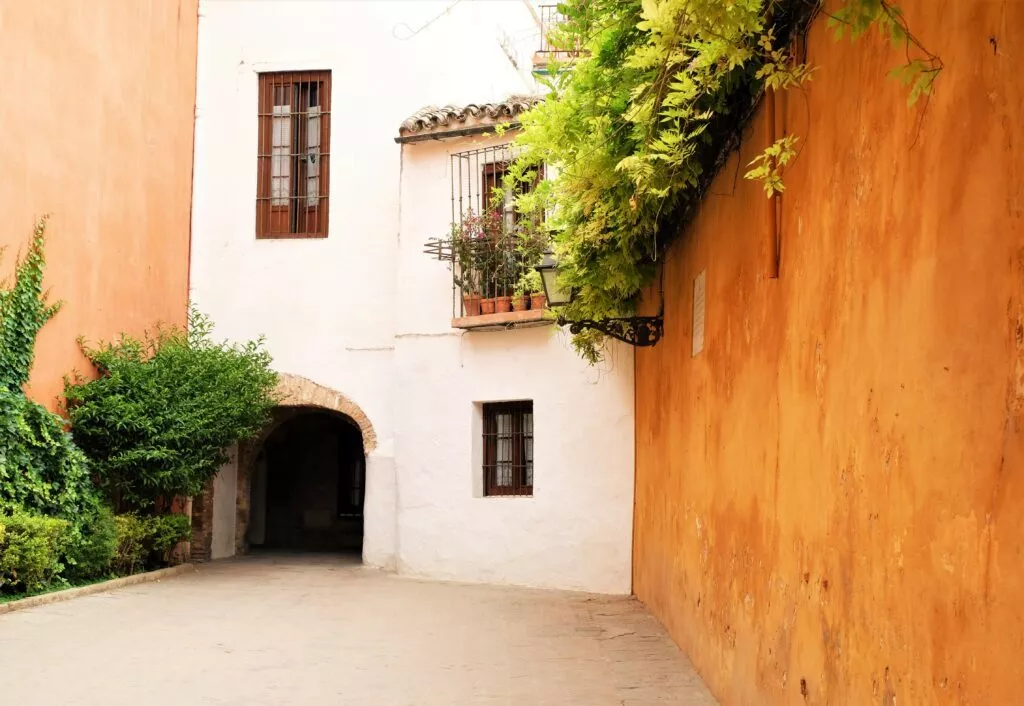
A little history:
The Jewish presence in Seville has been documented since Roman times and continued during the Visigothic and Muslim periods.
However, the expulsion of the Jews from Al-Andalus in 1146 caused their presence in the city to disappear for a long time. At that time, many took refuge in northern Spain.
The Juderia, as we know it, is the district of the city of Seville where the Jewish community settled after the conquest of Seville by Ferdinand III of Castile in 1248 (until its expulsion in 1492, by virtue of the Edict of Granada of the Catholic Monarchs).
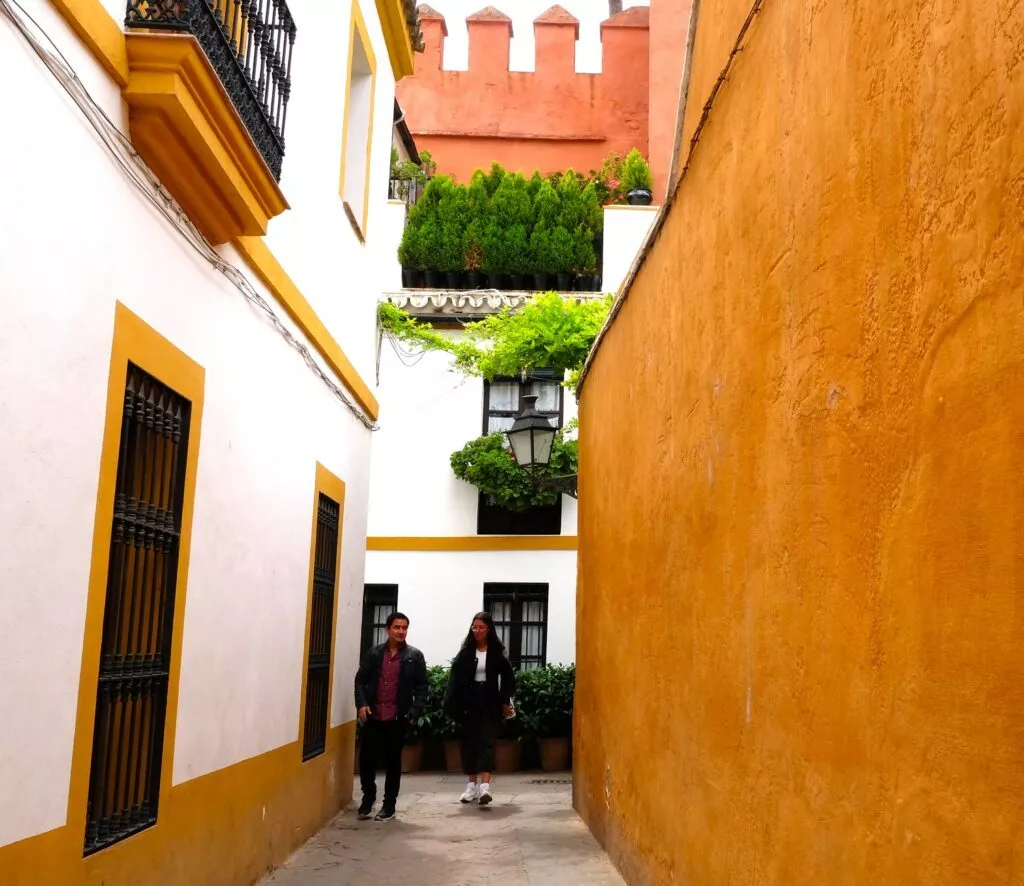
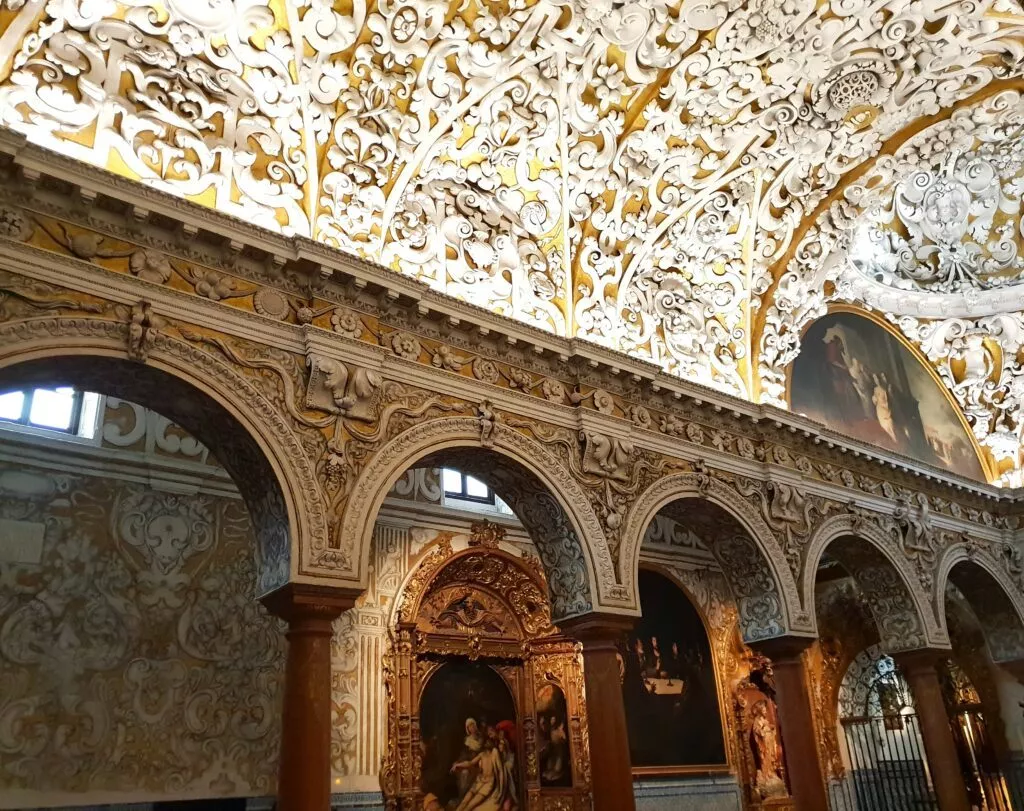
Note: Shortly after the conquest, King Alfonso X granted the conversion of four mosques into synagogues. These correspond to the current churches of Santa María la Blanca and San Bartolomé, the former church of Santa Cruz, and the Convent of Madre de Dios.
I invite you to visit the incredibly beautiful Santa María la Blanca (below).
Vejer de la Frontera, in the footsteps of the Sephardim in a white village
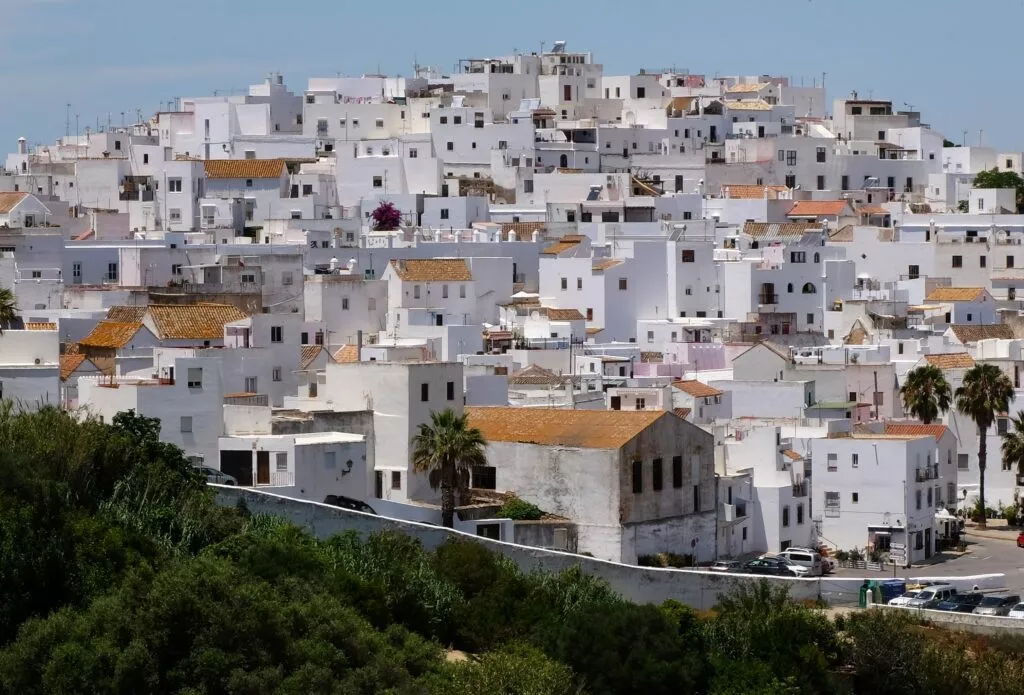
Vejer de la Frontera, in the province of Cádiz, is a white village of great beauty. It is also part of the network of the most beautiful villages in Spain. Of course, in a village, the traces of Sephardim are less prominent than in large cities.
Arcos de las Monjas
However, during your visit to Vejer, you shouldn’t miss the most emblematic place in the village. These are the Arcos de las Monjas – the nuns’ arches. You reach Callejón de las Monjas via Calle Judería.
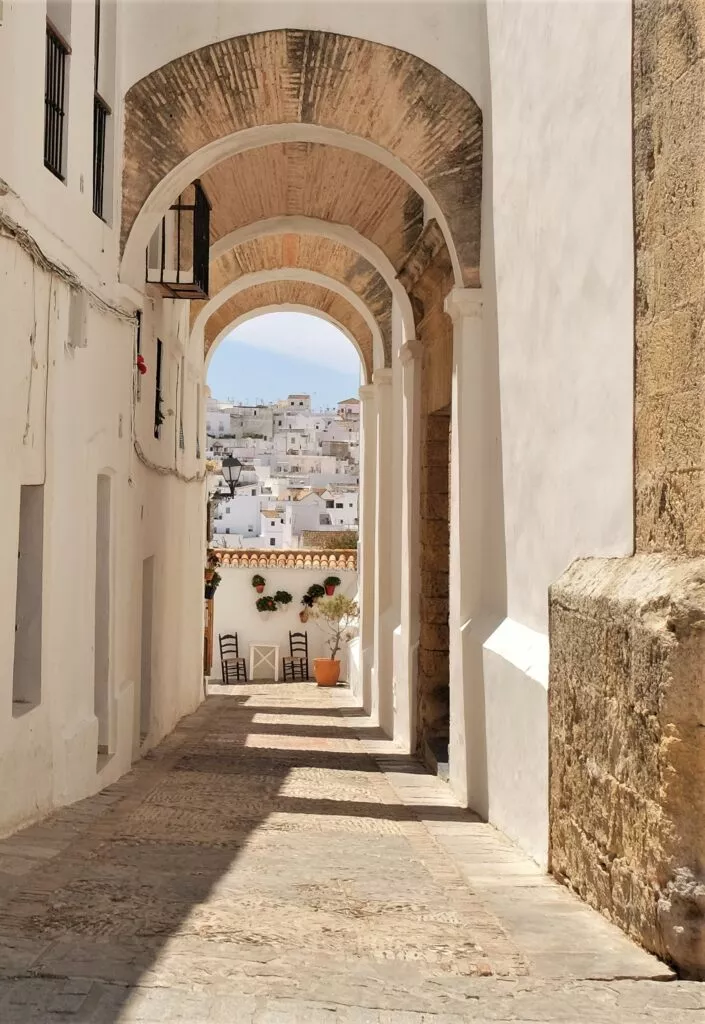
This place is located in the old Jewish quarter of Vejer de la Frontera. It is a Jewish quarter dating from the 13th to 15th centuries. The old Jewish quarter is adjacent, as was often the case, to the wall of the old medina.
The wall is a historical treasure to be seen in Vejer de la Frontera. Walking along the street between the wall and the houses, you can almost feel the past.
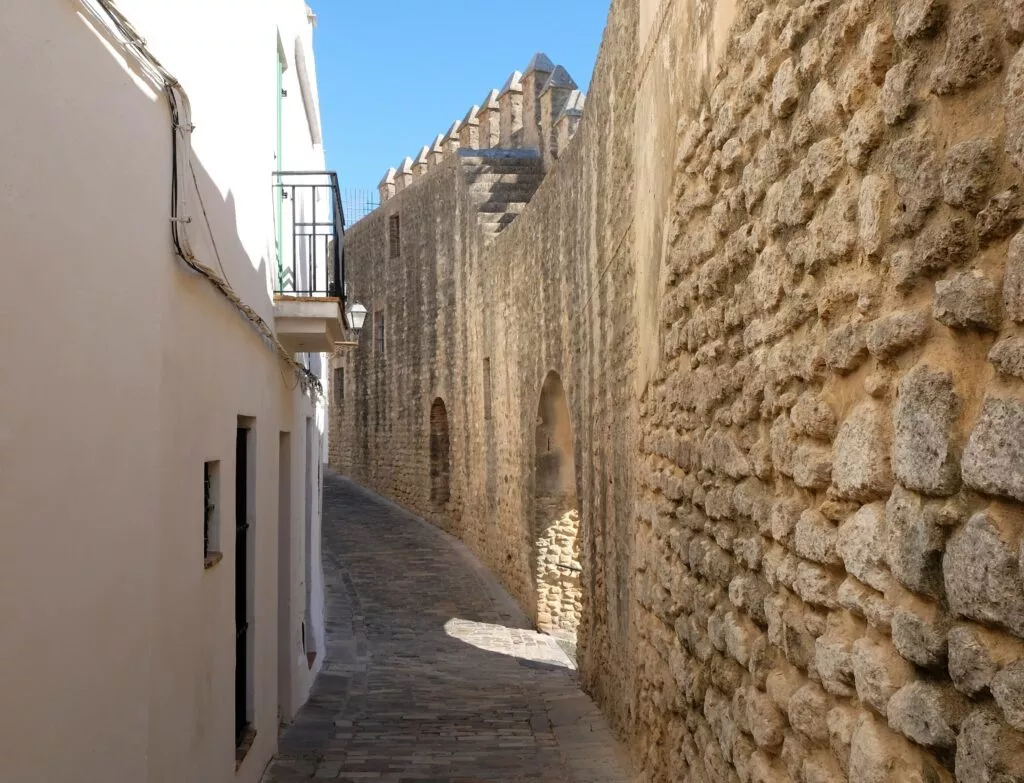
These ancient walls of Vejer de la Frontera are well preserved and offer a pleasant walk along their ramparts.
Another place to see is the Arco de la Puerta Cerrada (Arch of the Closed Gate).
This gate owes its unusual name to the village’s history: Vejer was long subject to pirate attacks from North Africa after the conquest. This gate, located in the old Jewish quarter, was particularly exposed.
It was eventually walled up and therefore closed! It has since been reopened.
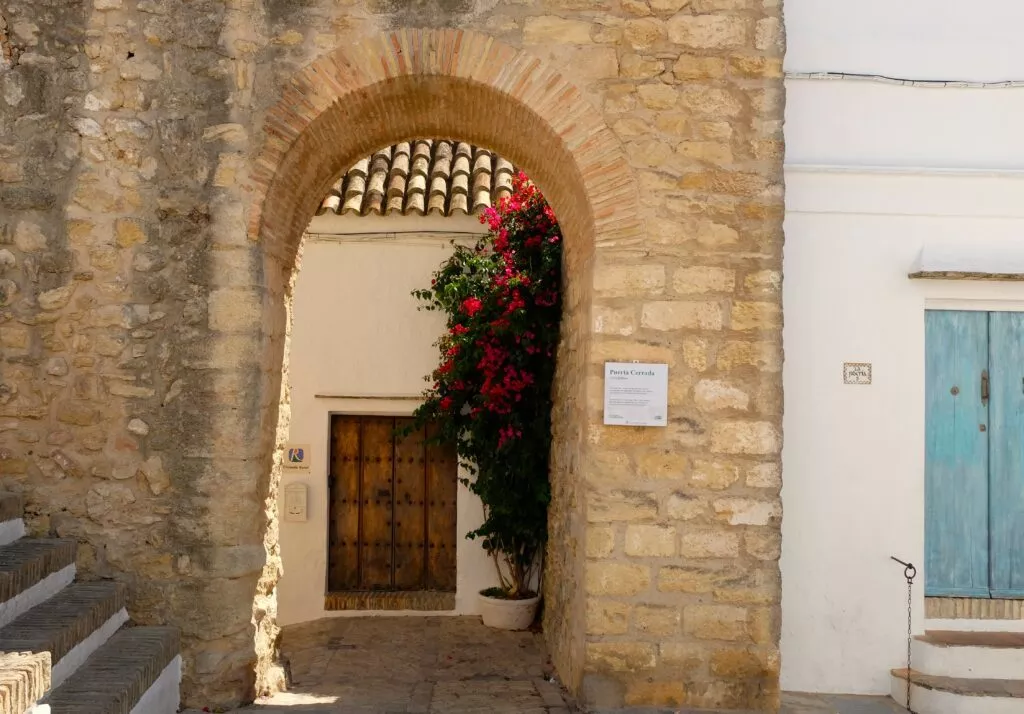
The Puerta Cerrada is one of four gates that remain in the wall today.
Note: This gate has two other names: Puerta del Sur and Puerta de Berbería.
The Sephardic Heritage of Malaga
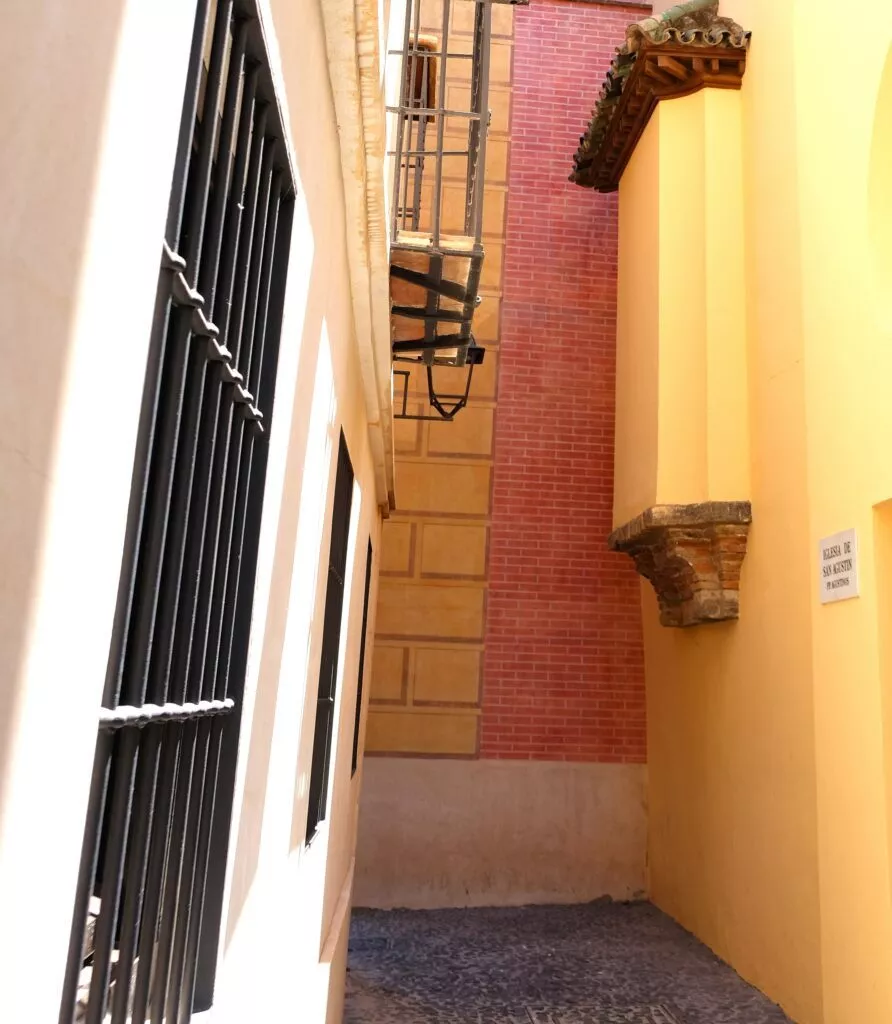
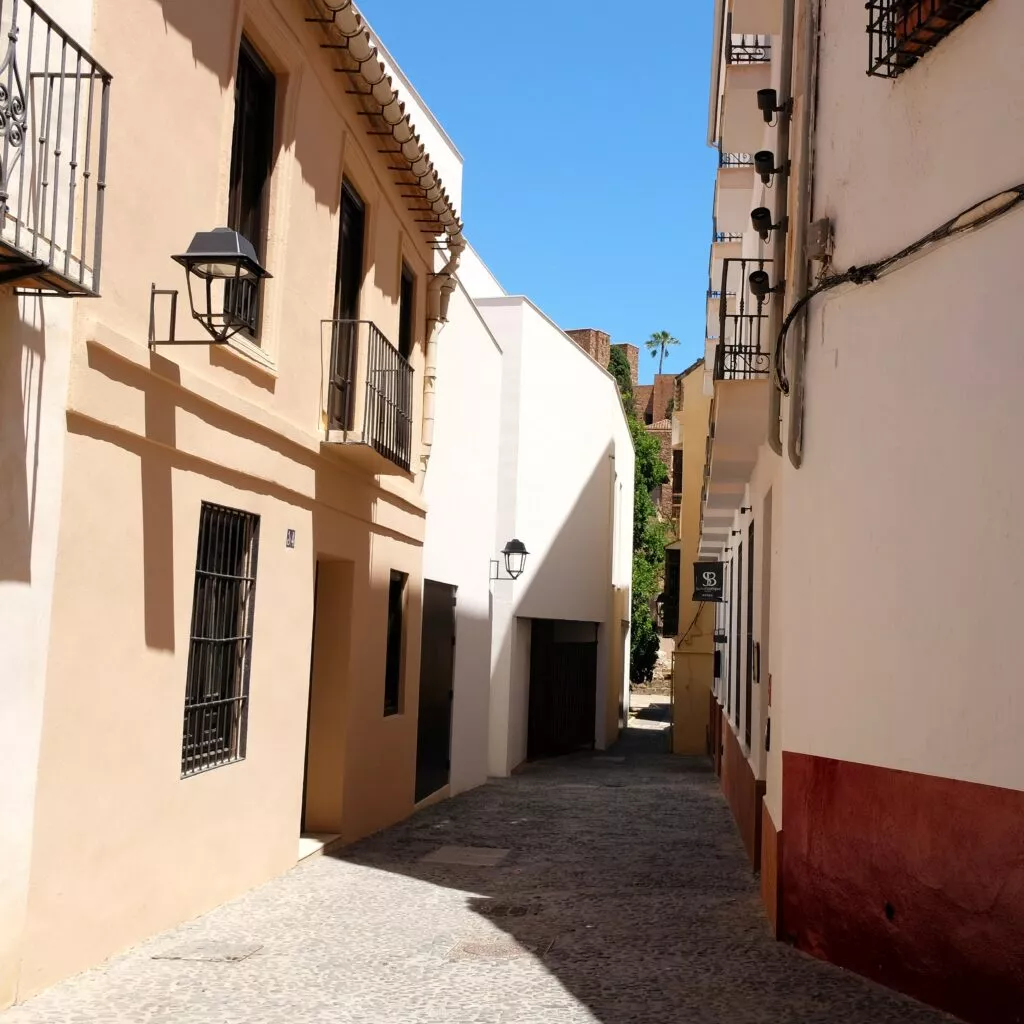
The old Jewish quarter of Malaga is located in the city center. The Jewish community in the Middle Ages lived, to put it simply, between Agustín Street and Alcazabilla Street.
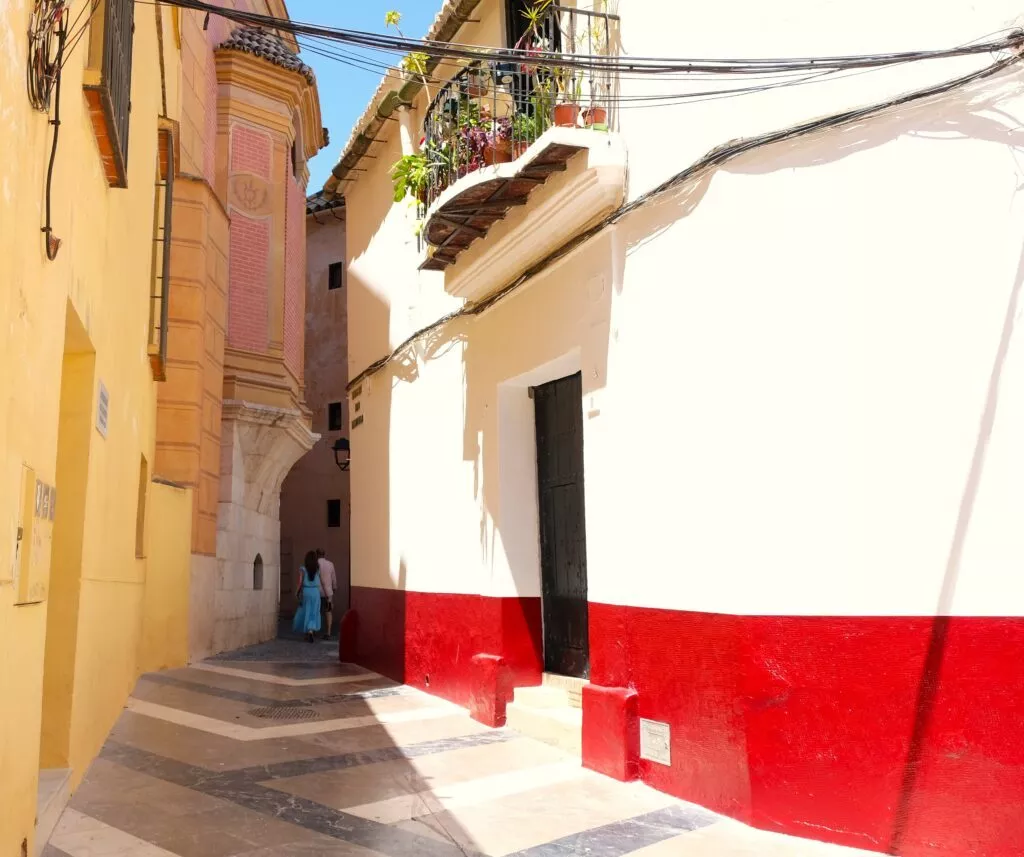
In the garden opposite the Roman Theater (and next to the famous El Pimpi bar and the Picasso Museum), life pays homage to the Andalusian Jewish philosopher and poet Shelomo Ben Yehuda (Ibn Gabirol).
Two minutes from the statue, you can also see a small square, Plaza de la Judería, with the Ibn Gabirol Memorial Center.
The streets of the Jewish quarter from the Al-Andalus era transport us to another era. It is a pure joy to stroll through the few streets of this old neighborhood.
Granada – Garnata-al Yahud
In Granada, very little remains of the legacy left by the Jewish community.
The curious thing, however, is that when the Arabs named the city Madinat Garnata, they were naming an already existing neighborhood, Garnata-al Yahud, the Granada of the Jews.
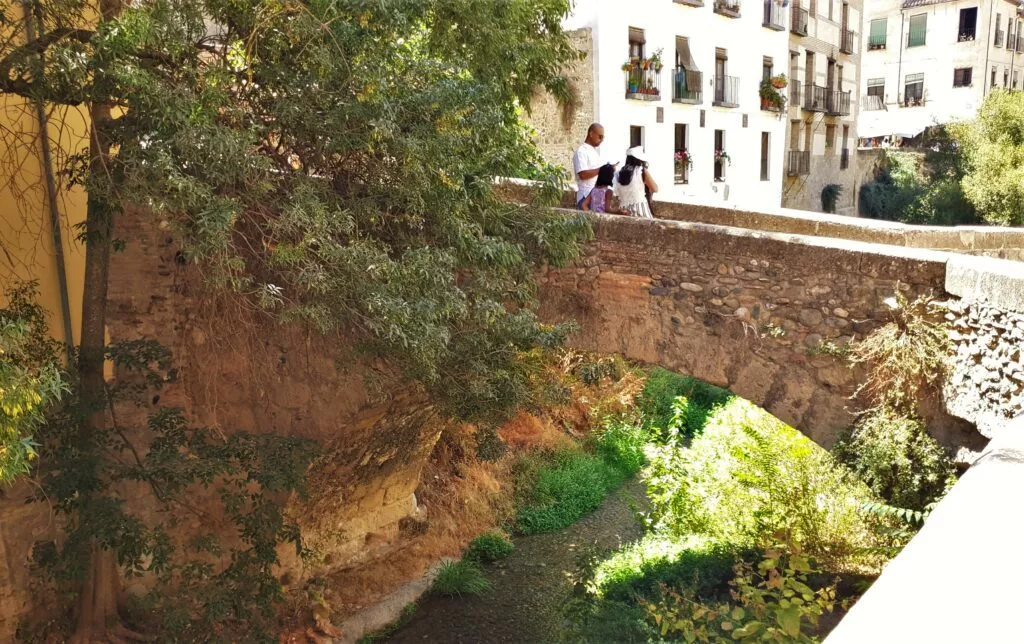
This neighborhood is now called El Realejo and is located between the Darro River and the Alhambra.
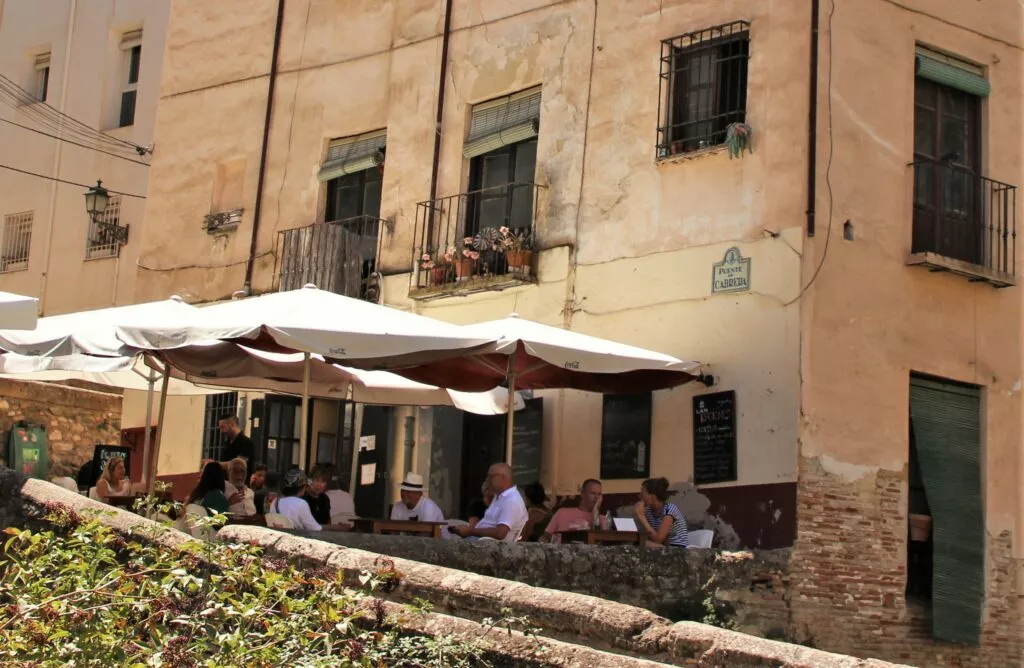
Since 2013, the Sephardic Memorial Center has been open in this neighborhood. Here, visitors can discover the entire legacy of this community in Granada.
The most important figures from this period are Samuel ibn Nagrelay, Moses ibn Ezra, and Yehuda ibn Tibbon.
Jaen
The old Jewish quarter of Jaen is located in the current historic district of Santa Cruz.
This is quite curious, as very little remains visible, but the information panels in various locations, as well as the atmosphere of this neighborhood, immerse us in history with a certain melancholy and emotion.
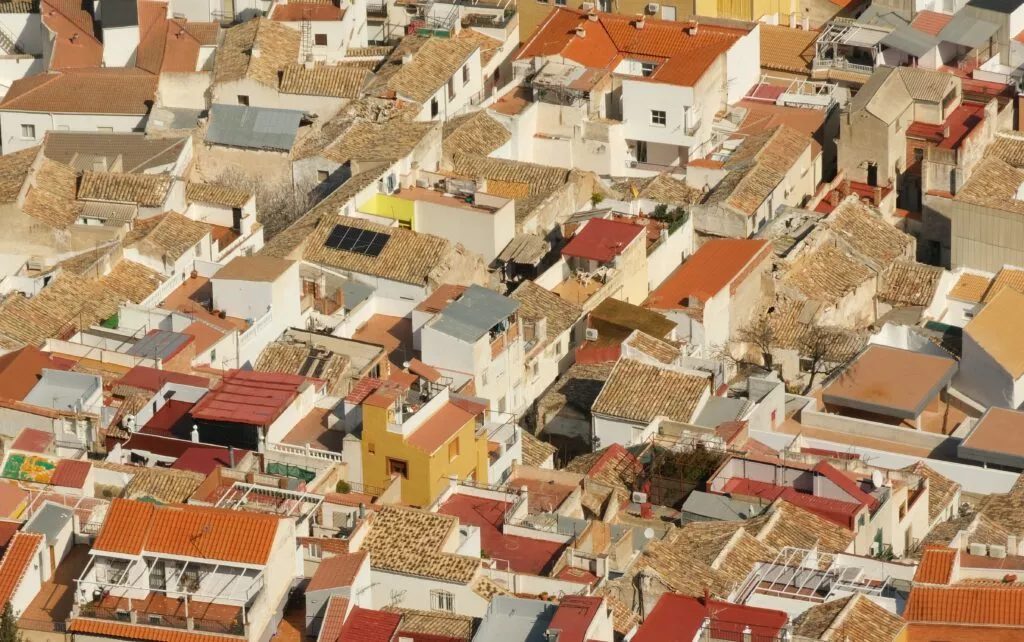
You can still breathe in the history as you wander aimlessly through the narrow streets of this medieval neighborhood.
Things to see in the Santa Clara neighborhood, a former Sephardic community in Jaen:
- Interpretation Center for Jewish Culture and the Role of Jaen
- Santa Clara Monastery, where the synagogue that became the Church of Santa Cruz is located
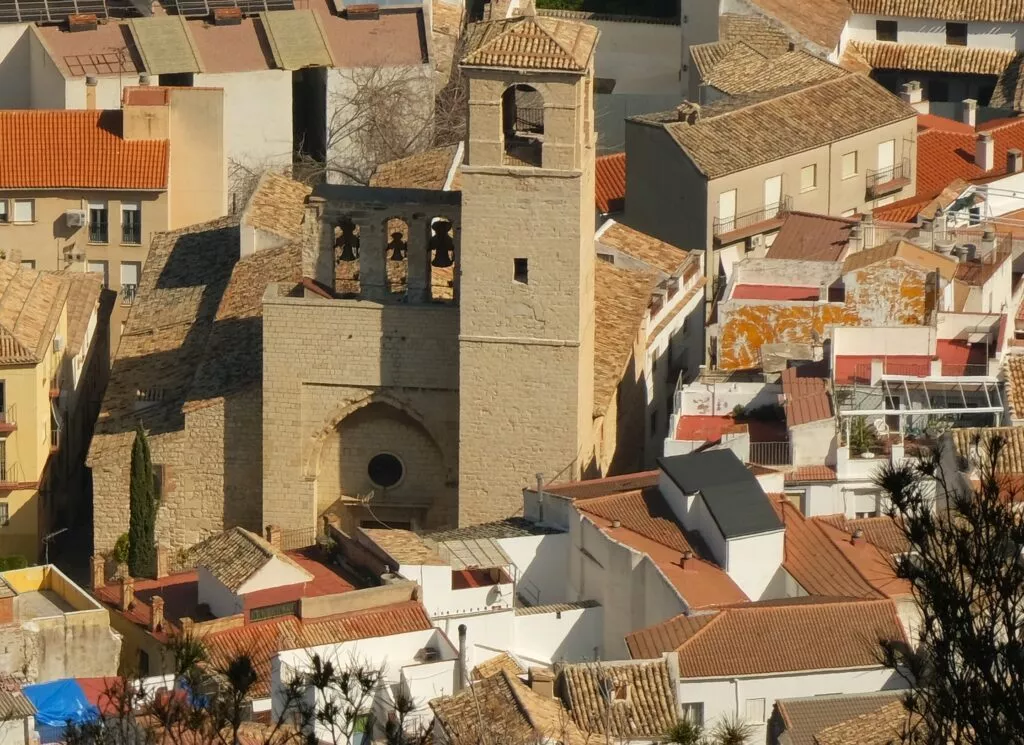
- San Andrés Church (which is also believed to have been a former synagogue)
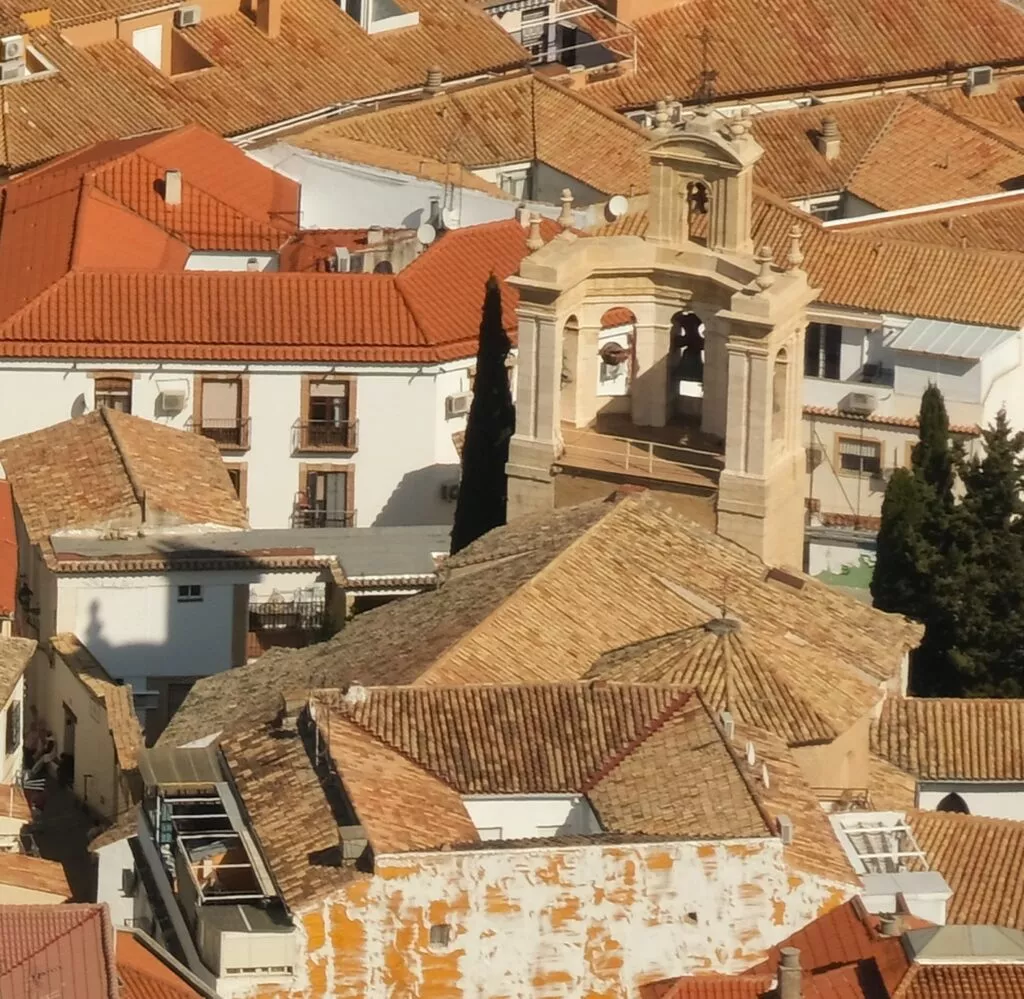
- San Juan Bautista Church (former mosque)
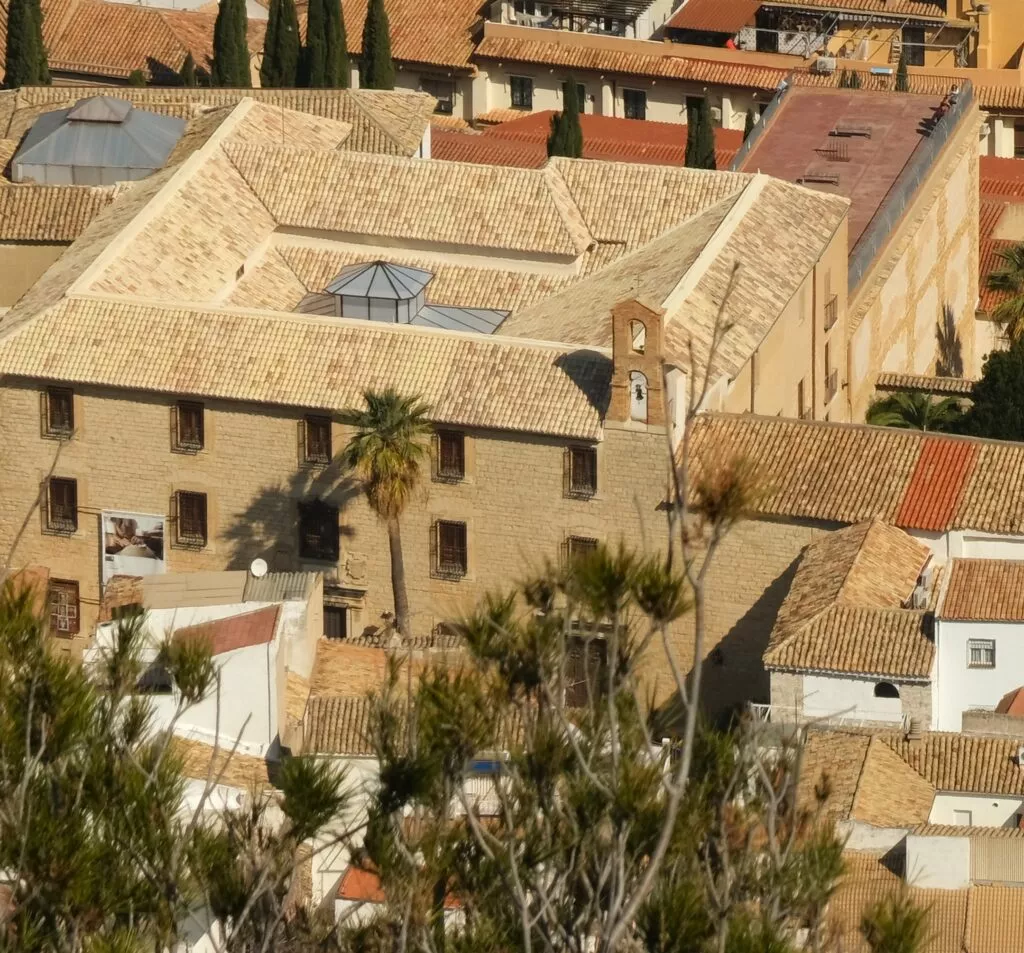
- The Arab baths. These Arab baths date back to the 11th century. They have been open to visitors for several years. Jews and Christians were allowed to use these Arab baths on certain days. They were discovered in the 20th century under the Villardompardo Palace:
An anecdote about expressions that have survived over time (this is also the case in Lucena) in Jaen:
You can hear the expression “hacer el sabado”. This is a popular expression whose origins are linked to the Sabbath, which today means to do the housework, the big weekly cleaning. Today, people “do the Sabbath” every day of the week.
However, during the time of the Inquisition, it was a way to ostentatiously show that they were not respecting the Sabbath by cleaning on Saturdays.
To help you get your bearings, this small neighborhood includes the streets: Callejón del Gato (Cat Alley), Calle Rostro, and Calle Cruz.
There is also the square: Plaza de los Huérfanos (Orphans’ Square), where there is a monument dedicated to the Jews expelled from the city.
At the bottom of the monument, a double inscription in Spanish and Ladino recalls that “the traces of those who walked together can never be erased.” In Ladino: “las trasas de ken anduvieron endjuntos nunca podrán ser albaldadas”.
Hasdai ibn Shaprut
Finally, discussing the Judería of Jaen is an opportunity to highlight Hasdai ibn Shaprut.
This man had an absolutely extraordinary destiny, that of a Jewish physician and diplomat in Al-Andalus! His full name was Hasday Abu Yusuf ben Yitzhak ben Ezra ibn Shaprut, born in Jaen (Jayyān) in 915 and died in Córdoba (Qurtuba at the time).
He was appointed physician to Caliph Abderraman III and became one of his chief advisors. Although he never received the official title of vizier (minister), he performed duties similar to those of a modern foreign minister for Caliphs Abderraman III and Al-Hakem II.
He established alliances between the Caliphate of Córdoba and other powers and was responsible for receiving embassies, such as the one sent to Cordoba in 949 by the Byzantine emperor Constantine VII, who brought the caliph a magnificent codex of Dioscorides’ botanical works, highly valued by Arab physicians and naturalists. With the help of a learned Byzantine monk named Nicholas, Hasdai translated the work into Arabic.
He was also named Nasí by the caliph, meaning head of the Sephardic community in the caliphate, until his death in 975, leaving an incredible legacy to the entire world.
Ubeda
This is the eighth and final site proposed, the one open to the public for only a few years. Ubeda, along with Baeza and Cordoba, is one of the three Andalusian cities listed as World Heritage Sites.
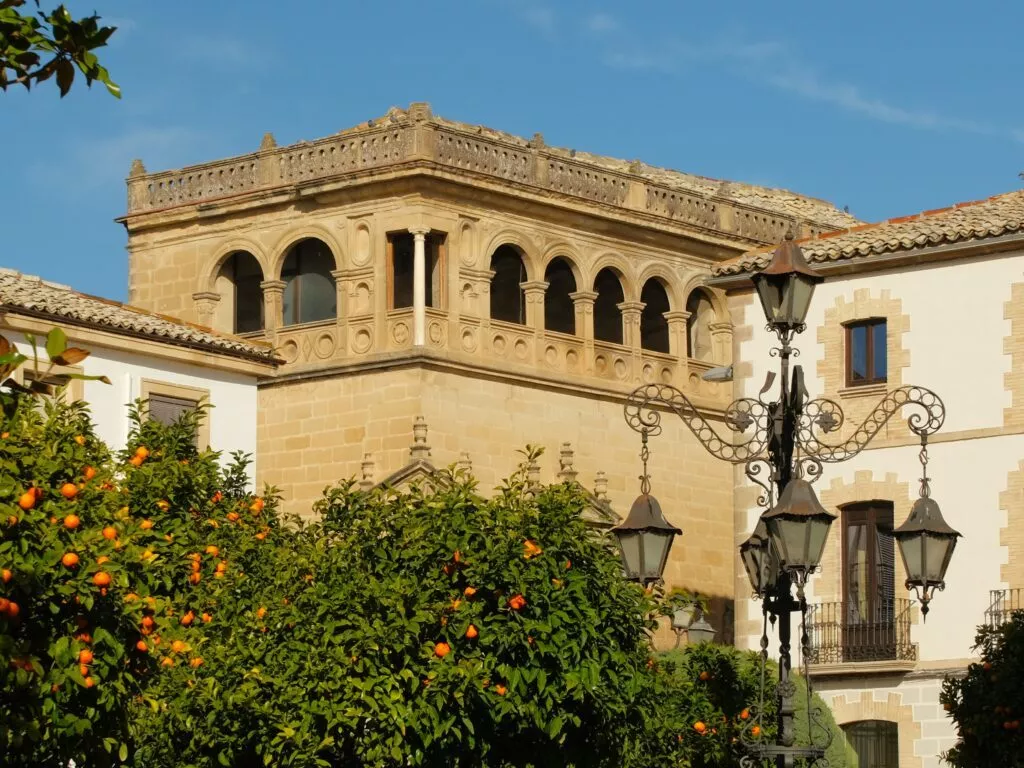
This incredibly beautiful city boasts the greatest Renaissance architectural heritage in Andalusia. But since 2010, it has been offering visitors a treasure, discovered by chance: the Solomon Synagogue.
The Solomon Synagogue, better known as the Water Synagogue, is a must-see in Ubeda.
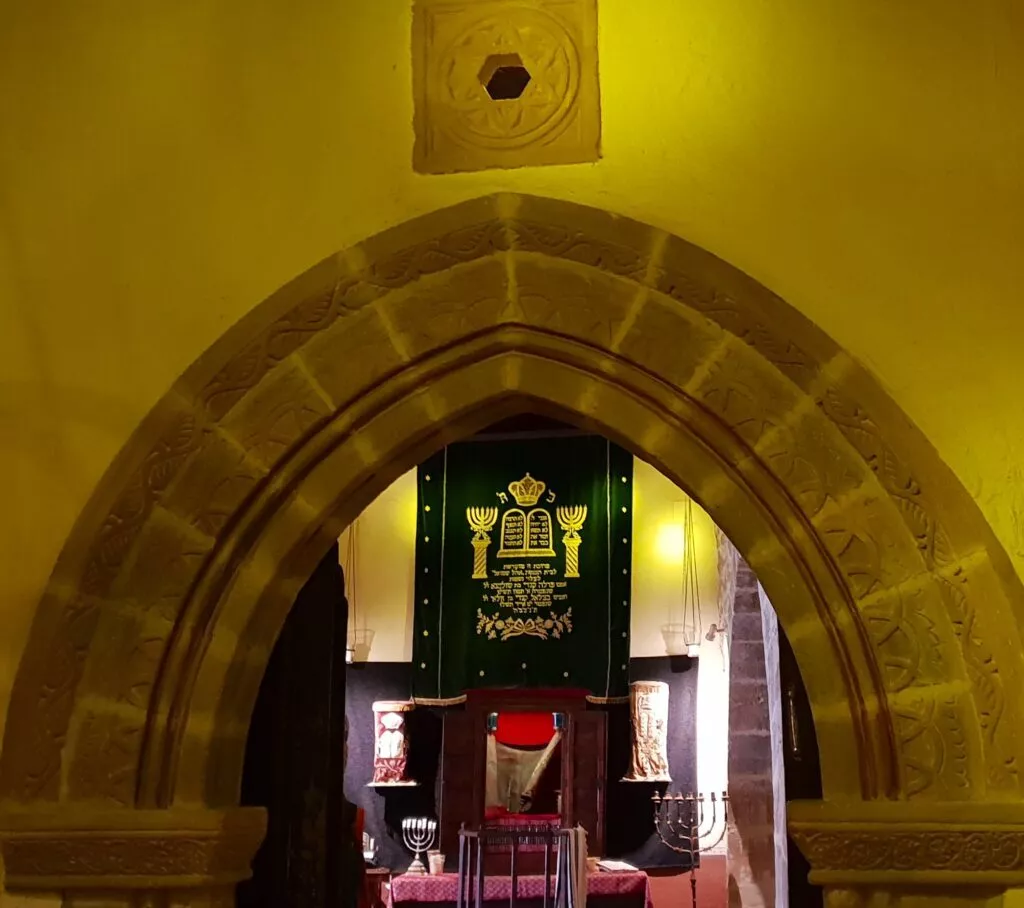
It is located not far from the Palacio de la Vela de los Cobos, and its recent discovery is quite incredible. Here is the story of the synagogue’s discovery (with some photos from the visit):
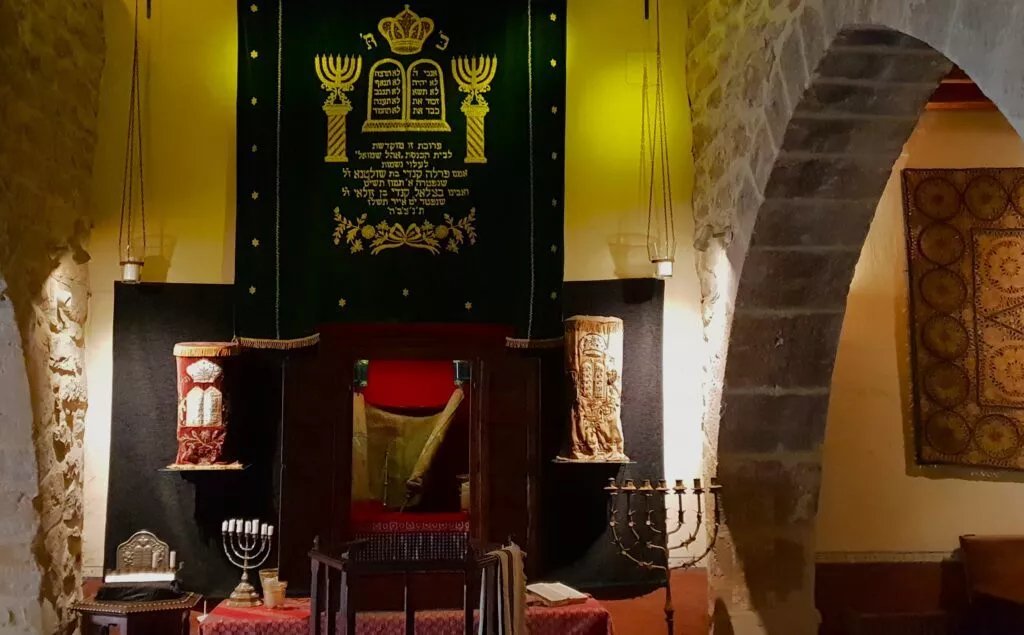
In 2007, a contractor bought three old houses in the center of Ubeda with the intention of building two-story apartments, a ground-floor shop, and an underground parking garage. The demolition work on these houses, located at the corner of two small streets, could not be carried out with an excavator, so they had to be demolished little by little to remove the rubble.
The rabbi’s house next to the synagogue.
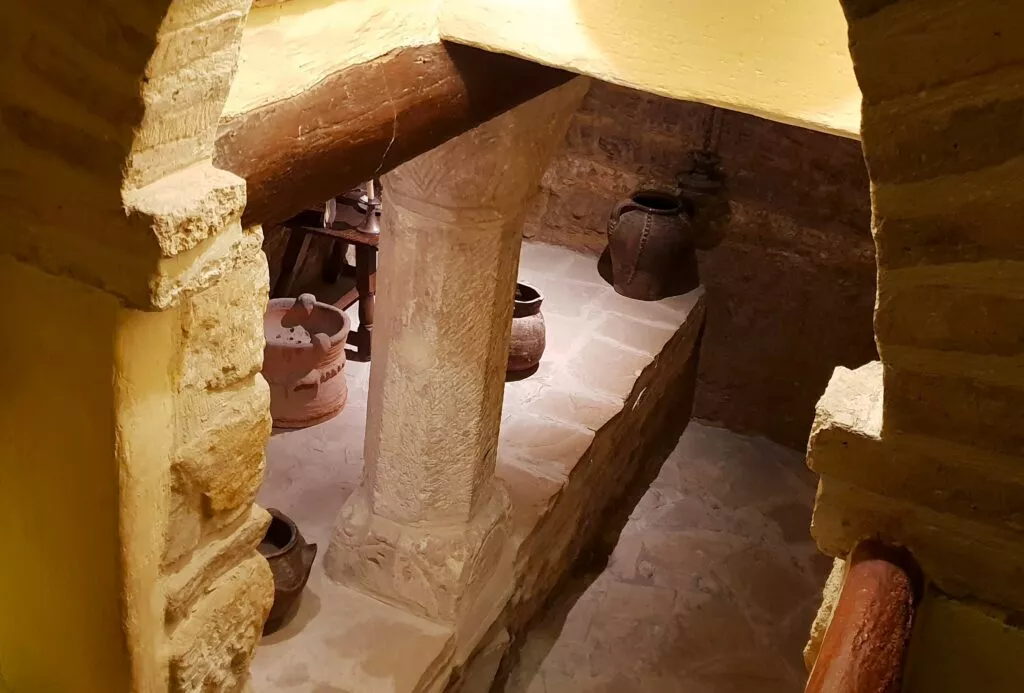
Then the miracle happened: hidden behind walls… the walls of an old synagogue—dating from the 13th century—and the rabbi’s house next to the synagogue were revealed.
Another incredible thing:
When they dug underground, in addition to the wells, they discovered an area of damp earth. By removing the earth, steps (7 steps) appeared, and then a mikveh.
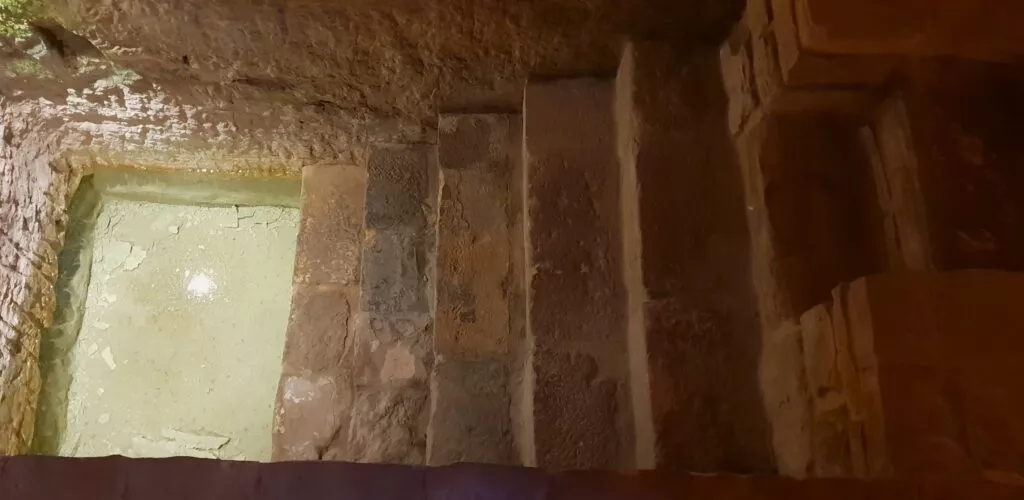
Note: This is the only one I’ve seen like this in Andalusia, with water still flowing in, filtered by the surrounding rocks.
Curiosity and irony of history: the Inquisition tribunal was established on part of this synagogue starting in 1478.
This was, of course, a terrible time for many people, including the anusim (Jews forcibly converted to Christianity, in this case). A local theory is that it was an anusim who “managed to become the director of the tribunal” to ensure that everything that was supposed to be hidden there was.
The synagogue was opened to the public in 2010 and 30-minute tours in small groups are offered.
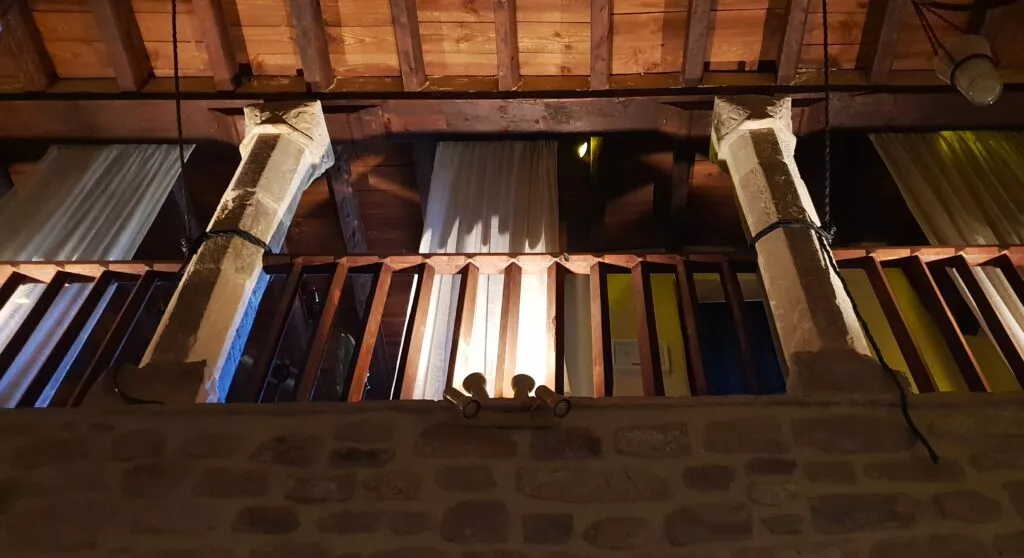
A very interesting room: the Women’s Gallery. This is a space reserved for women and children to attend religious ceremonies:
To conclude this tour on the Sephardic heritage route in Andalusia
It is a journey full of emotion and beauty, and an invitation to walk “in the footsteps of those who left no visible traces, but a profound legacy.”
If during your trip to Andalusia you are lucky enough to see Sephardica and Emilio Villalba in concert… your trip will be even more wonderful. I was lucky enough to see them at the 3 Cultures Festival in Frigiliana. An experience full of emotion, in Ladino:
Following the Sephardic route is more than a journey. It’s a tribute to a silent but ever-vibrant memory, to the men and women who contributed to making Andalusia a cradle of tolerance, knowledge, and beauty.
It’s also a chance to discover an Andalusia off the beaten track, deeper, more human.
A map of Andalusia with the most beautiful Sephardic sites to see
Note: To see all the villages, you need to zoom out the map 🙂 . You can do this by clicking on the “-” symbol.
Some useful links for coming and staying in Andalucia for a few days
Staying on the Costa del Sol? Explore Andalucia with day trips from Malaga (Torremolinos, Estepona, Benalmadena).
If you’re planning to visit Andalucia, including Seville, you can explore Seville on a private guided tour.
Discover an unusual Andalusia with 15 Very Surprising Places.
Easy and economical bookings
The latest articles on Andalucia
-
Interactive map of Andalucia with best places to see
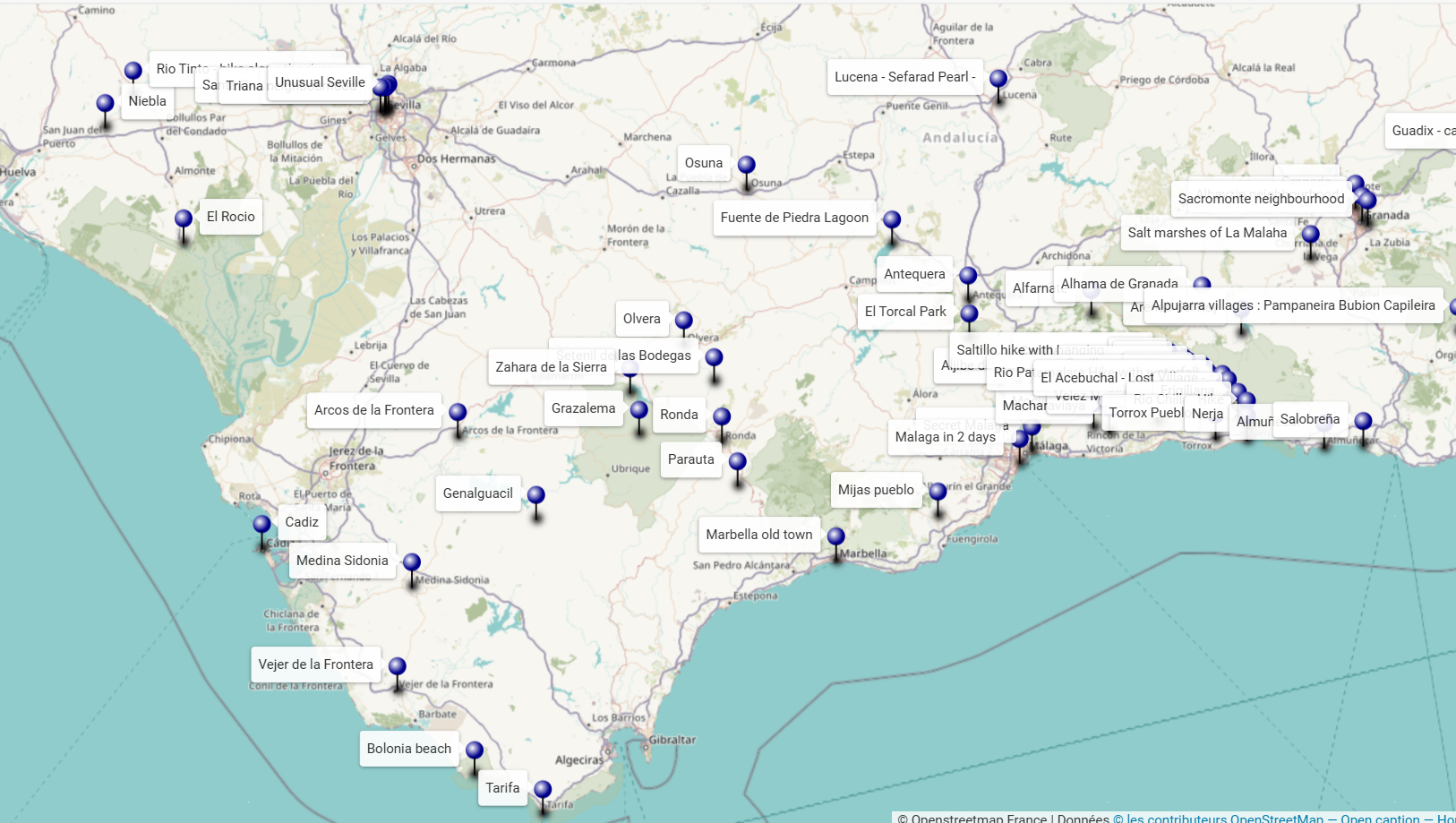
An interactive map of Andalucia to discover the sites to see around your holiday destination or to prepare a tour or road-trip.
-
What to see in Jerez de la Frontera: 15 top things to see and do
Here are all the best places to visit in Jerez de la Frontera. You’ll also find a list of things to do, such as visiting the bodegas.
-
What to see and do in Sanlucar de Barrameda
Here’s the best of what to see and do in Sanlucar de Barrameda, a wonderful little coastal town in the province of Cadiz.
-
What to see in Nijar a typical village in the province of Almeria
What to see in Nijar Here are the essentials to visit in the delightful village. The municipality of Nijar also offers some heavenly beaches.
