




Torremolinos What to do ? Activities and must-sees
Activities and visits to do in Torremolinos
In this article, you will find essential information on what to do and see in Torremolinos:
- A few words about Torremolinos and its origins
- Where is Torremolinos located on the map?
- What to see in Torremolinos?
- Guided tours departing from Torremolinos
- What to do in Torremolinos?
- Booking accommodation
- Where to have lunch in Torremolinos?
- Map of Torremolinos with places to see
- The Feria de Torremolinos
- Some useful links
- Latest articles on Andalusia
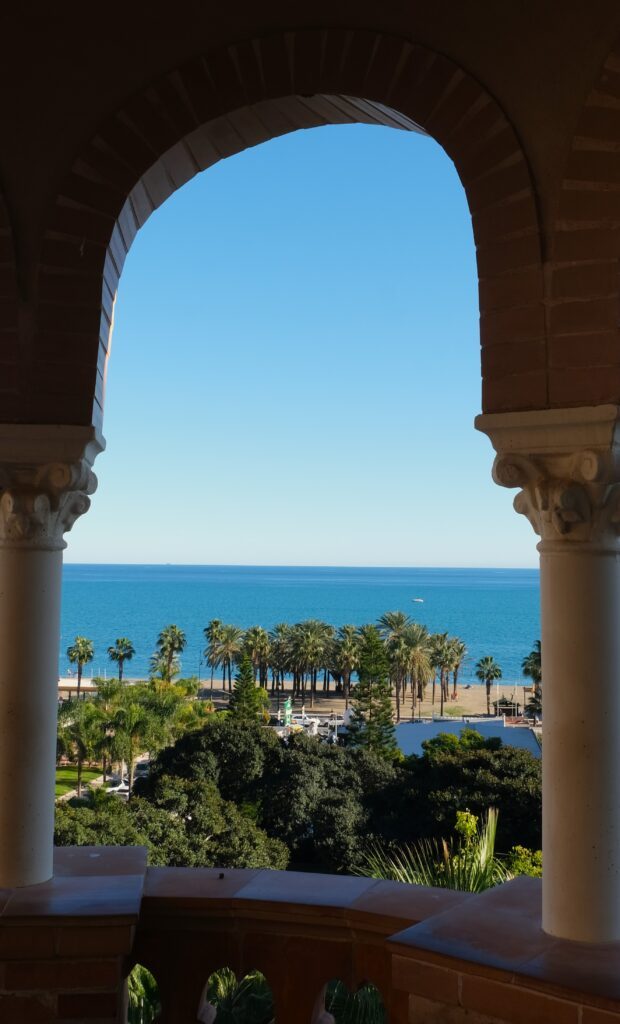
A few words about Torremolinos, its origins and its reputation
Torremolinos is a renowned seaside resort in the heart of the Costa del Sol. It is located just 13 km from the center of Malaga. Torremolinos also borders Benalmadena.
The 7 km of beaches, the atmosphere, and the nightlife are the main tourist attractions in Torremolinos. Streets and squares of Torremolinos are always very lively.
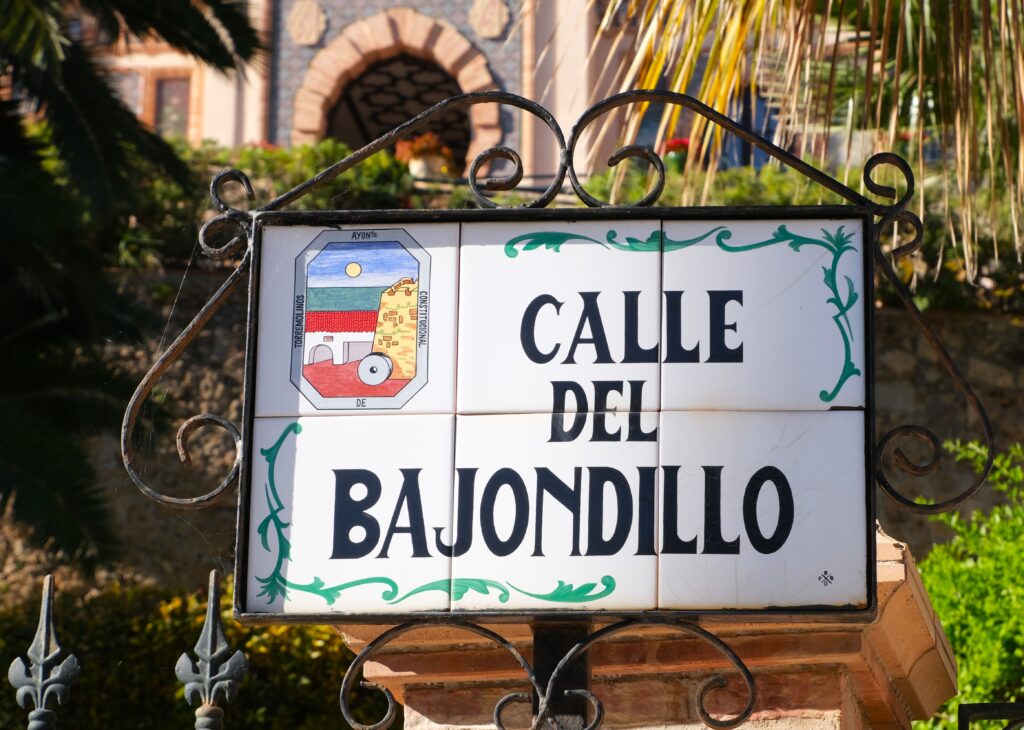
The origins of Torremolinos
According to the writings of Ptolemy (a Greek geographer and mathematician from the 1st century AD), the Phoenicians occupied this site 2,000 years ago.
Roman civilization left behind many vestiges. These remains of Roman public baths can still be seen at Peñon del Castillo (now known as Santa Clara Castle). The existence of these baths is mentioned in the writings of Pliny the Elder.
The name Torremolinos first appeared in 1748. It refers to a watchtower built under Al-Andalus (Torre de Pimentel, which we will discuss below) and the many water mills in the surrounding area.
Understanding Torremolinos’ worldwide fame
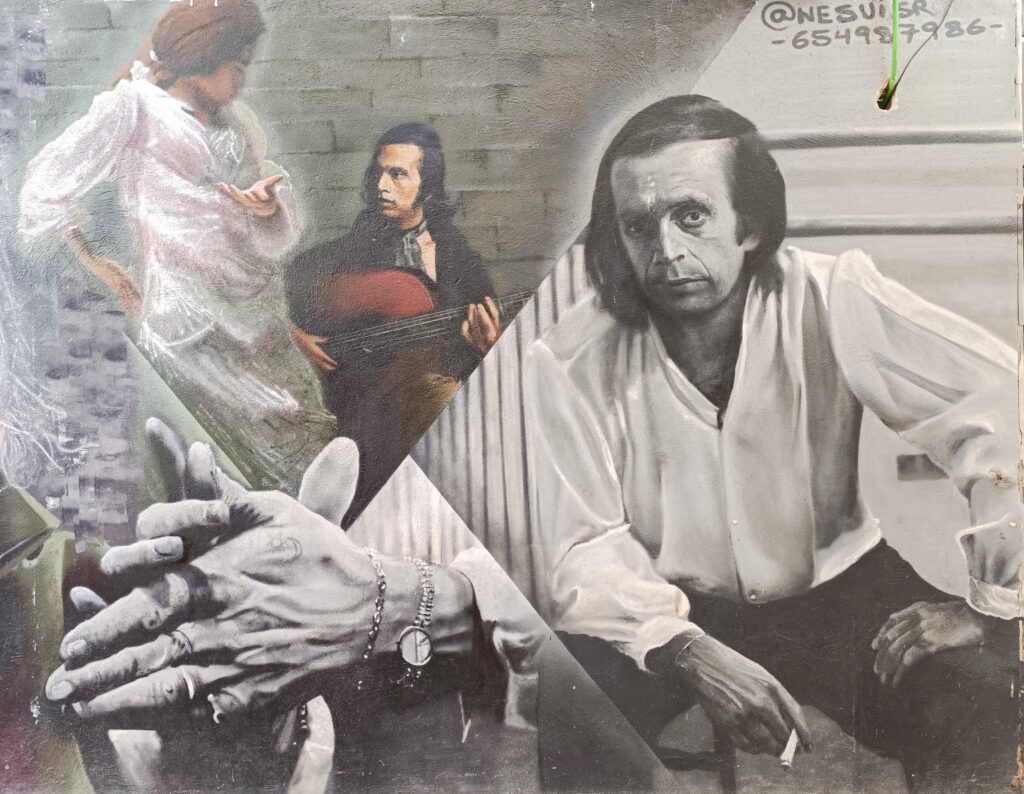
The evolution of Torremolinos since the 1950s has been incredible and marks the beginning of international tourism on the Costa del Sol.
Here is some key information to understand the special place Torremolinos occupies on the Costa del Sol.
Note: as this is a bit long, I have added some photos of street art taken in Torremolinos.
In the early 1950s, Torremolinos was a small fishing village and a town attached to Malaga. During that decade, under Franco’s leadership, it became the leading seaside resort in Andalusia and Spain.
From the late 1950s through the 1960s and 1970s, Torremolinos welcomed a huge influx of intellectuals, beatniks, artists, and aristocrats.

Some famous personalities (not counting kings such as King Al Saud of Saudi Arabia) during those years: Grace Kelly, Rita Hayworth, Anthony Quinn, Ava Gardner, Brigitte Bardot, Salvador Dalí, Elton John, Marlon Brando, Orson Welles, Frank Sinatra, Kirk Douglas, Greta Garbo, Ingrid Bergman, Rock Hudson, Raquel Welch, Sofia Loren, Kim Novak, James Brown, Peter Ustinov, Claudia Cardinale, Geraldine Chaplin, Alain Delon, Tom Jones, John Lennon, Maurice Gibb (Bee Gees).

Note: another legendary figure who inspired the film Papillon (played by Steve McQueen) was a regular visitor to Torremolinos. Henri Charrière, a former prisoner, lived in Fuengirola and came down almost every day for an aperitif at V.I.P.’s or Pedro’s.
This cosmopolitan gathering created a very liberal and liberated atmosphere under Franco’s Spain.
The city became a benchmark for nightlife, leisure, and gay tourism.
Topless sunbathing, sexual liberation imported from Nordic countries, and the normalization of homosexuality made Torremolinos one of the most libertine fashionable destinations in the world during those decades. One of its great attractions was the famous sun-sea-sex.

In 1979, the first nudist area opened in a Spanish tourist establishment (the Garden of Adam and Eve).
During the 1980s, the Movida malagueña, a new wave of pop culture, arrived and replaced the libertine and glamorous reign of previous years. In 1988, Torremolinos separated from Malaga and became a municipality in its own right.
Today, Torremolinos is a composite of all these successive waves of freedom and one of the most important gay-friendly destinations in Spain and Europe.
Where is Torremolinos on the map?
What to see in Torremolinos?
1 – The beaches of Torremolinos
2 – Monumento a Gala
3 – Casa de los Navajas
4 – Molino del Inca Park
5 – San Miguel Church
6 – Calle San Miguel
7 – Torre de Pimentel
8 – Carrete de Malaga Statue
9 – Pasaje Begoña
10 – Torremolinos Market
11 – Street art in Torremolinos
Note: further down in the article, there is a map of the city showing the locations of the places mentioned.
1 – The beaches of Torremolinos

The beaches of Torremolinos are one of the main tourist attractions. The municipality offers 7 kilometers of coastline.
Here are the main beaches in Torremolinos:
- Playa de Los Álamos (or Playa del Cañuelo)
- Playamar (or Playa del Retiro)
- El Bajondillo
- La Carihuela
All four beaches are accessible from the paseo maritimo.
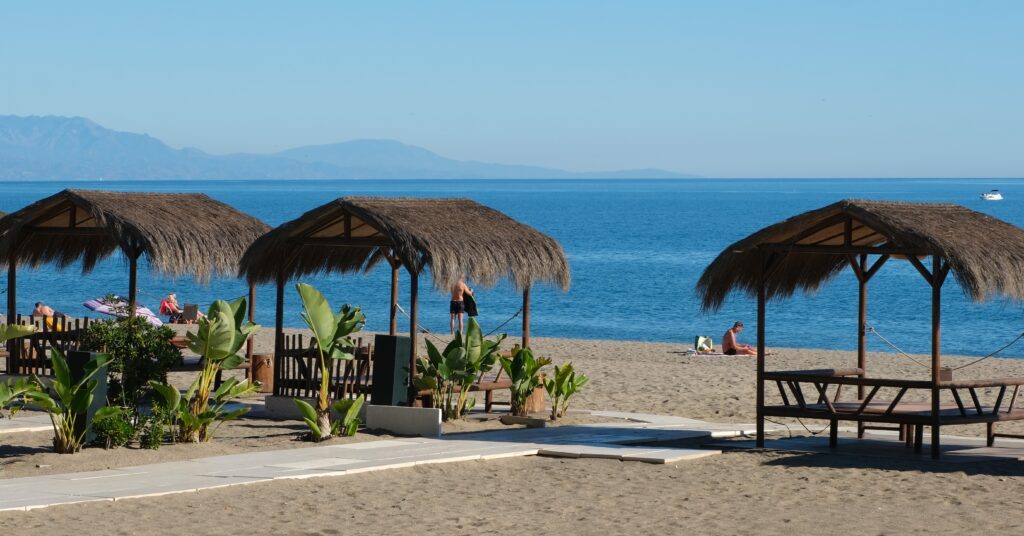
Here are two additional details:
- El Bajondillo beach is undoubtedly the most popular. The El Bajondillo district, which is very touristy, is located just between the beach and the historic center of the city.
- La Carihuela is the old fishing district. It is known for its seafood restaurants and relaxed atmosphere.
2 – Monumento a Gala
This sculpture in homage to Gala, Dalí’s muse, is interesting. First of all, it is a very beautiful sculpture. Secondly, it is a tribute to what Torremolinos represented in its day.
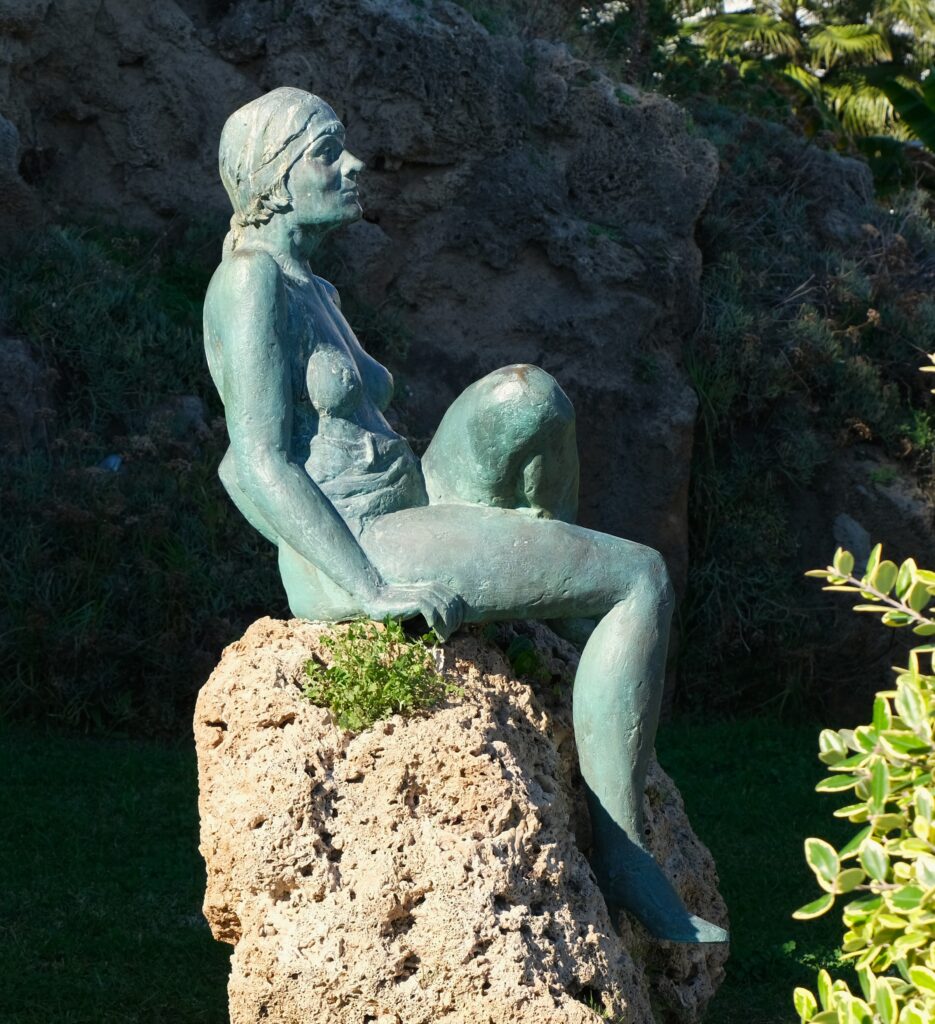
It was Gala who started the topless trend in Torremolinos. However, there are two myths surrounding this topic:
- The beginnings of topless sunbathing are sometimes attributed to Brigitte Bardot when she stayed in Torremolinos in 1957 to film Roger Vadim’s Les Bijoutiers du clair de Lune (The Moonlight Jewelers).
- It is also said that this fashion arrived with the establishment of a Swedish holiday school in 1954. This school, located in Playamar, was reserved for girls from wealthy families, and the students came in waves every two weeks.
3 – Casa de los Navajas
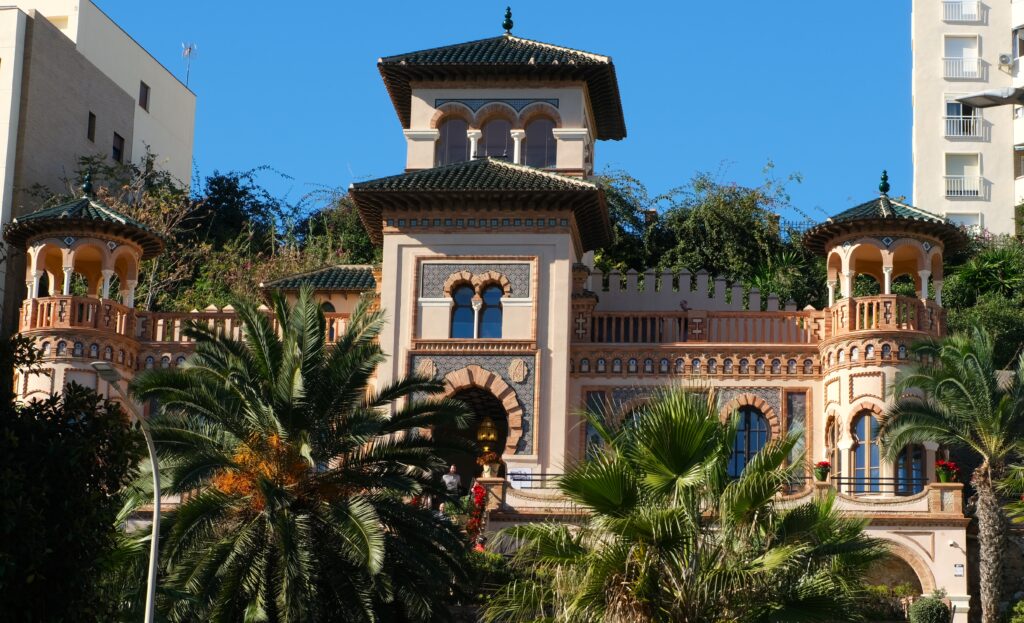
This is a beautiful neo-Mudejar style, located in the Bajondillo district. It is now open to the public with free admission and is classified as a Site of Cultural Interest.
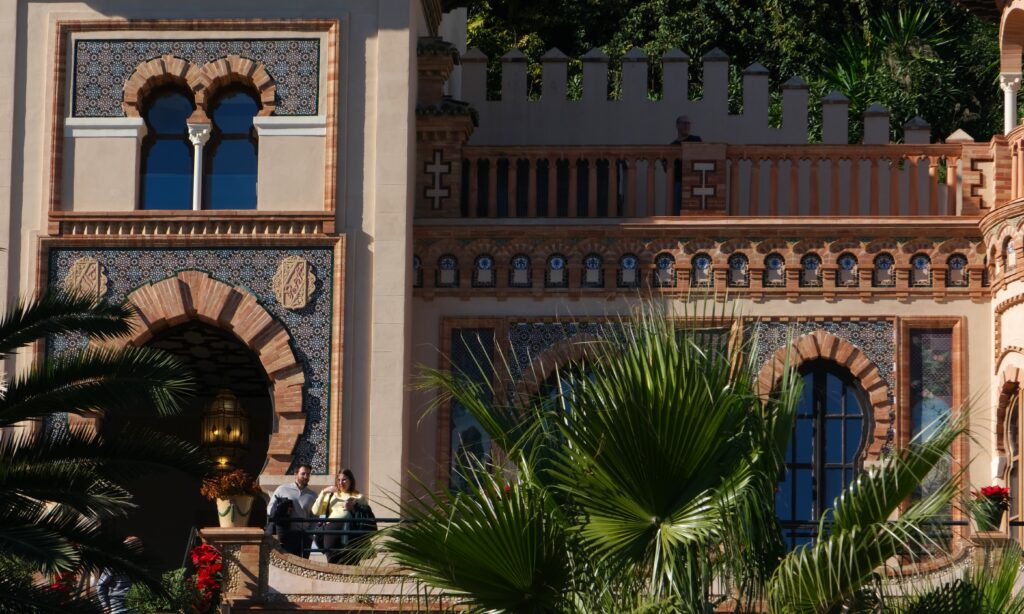
This palace originally belonged to the Luque-Navajas family, who made their fortune in sugar cane. Later, the heirs donated the palace to the municipality.
Today, it belongs to the town hall and hosts exhibitions and can be privatized for wedding ceremonies.
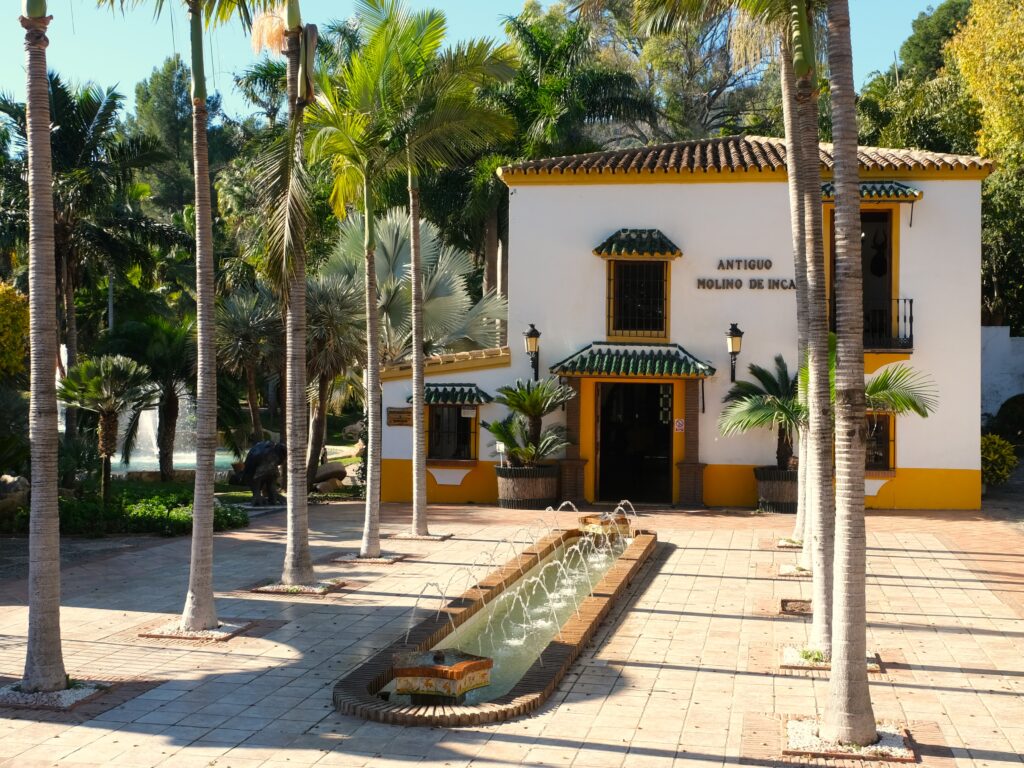
4 – Parque Molino del Inca
A visit to the Molino de Inca botanical garden in Torremolinos offers a pleasant moment surrounded by nature. It is like an oasis.
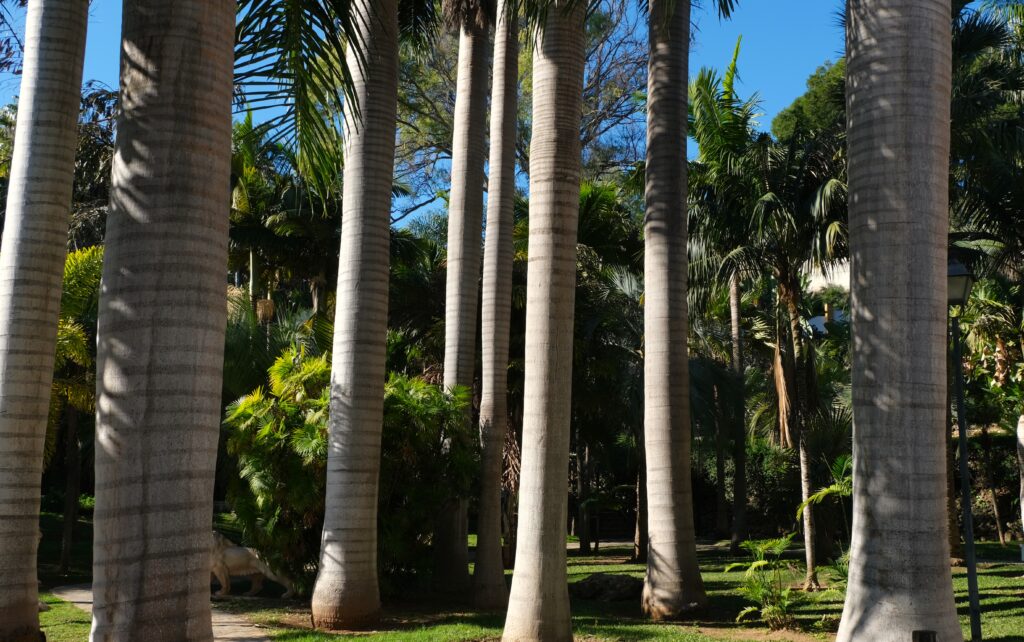
This 4-hectare garden is home to 150 palm trees of 50 different species. There is also an ornithological area with several species of birds, mainly owls and parrots.
The mill in this park is one of many mills that once existed in the area. These water mills were used to produce flour (Molino de Inca) or paper.

With its small ponds and fountains, it offers a haven of peace and coolness in summer.
Note: next to the botanical garden is the Pinar de los Manantiales, a forest considered to be the lungs of the city. There are even barbecues for families who want to come and spend the day grilling.
La Batería Park
Closer to the city center is La Batería Park. It is also an oasis of tranquility in Torremolinos. In the park, the observation tower offers a panoramic view of the city and the coast.
5 – San Miguel Church
The church of San Miguel Arcángel was built in 1718 and renovated in 1896. This church is located on the Plaza de los Santos Arcángeles, which is the former name of the church.
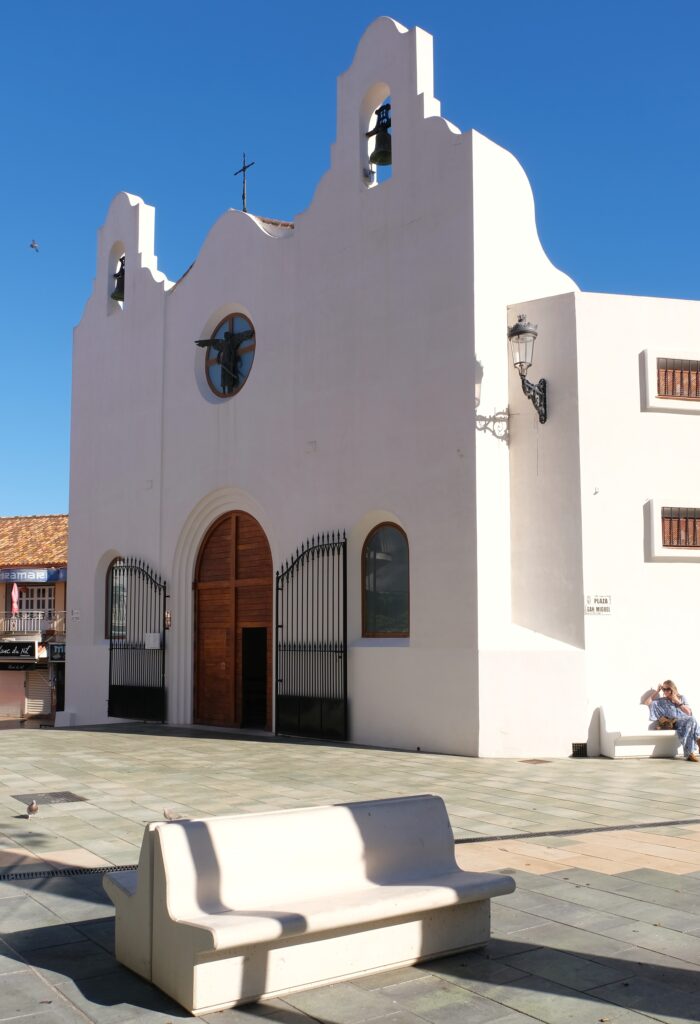
Its architecture and interior decoration reflect the cultural heritage of the city. I really liked its modern holy water font with the Latin inscription just above it.

6 – Calle San Miguel
Calle San Miguel is the heart of Torremolinos’ historic center. It’s the perfect place to shop, have a drink, and enjoy a lively atmosphere, both during the day and in the evening.

7 – Torre de Pimentel
The Torre de los Molinos is located at the end of Calle San Miguel, just before the descent to El Bajondillo beach via the Cuesta del Tajo.
It was built around 1300, during the Al-Andalus period. This tower was one of the defensive towers of the Kingdom of Granada, built along the coast. It was used to warn of attacks by Barbary pirates from North Africa.
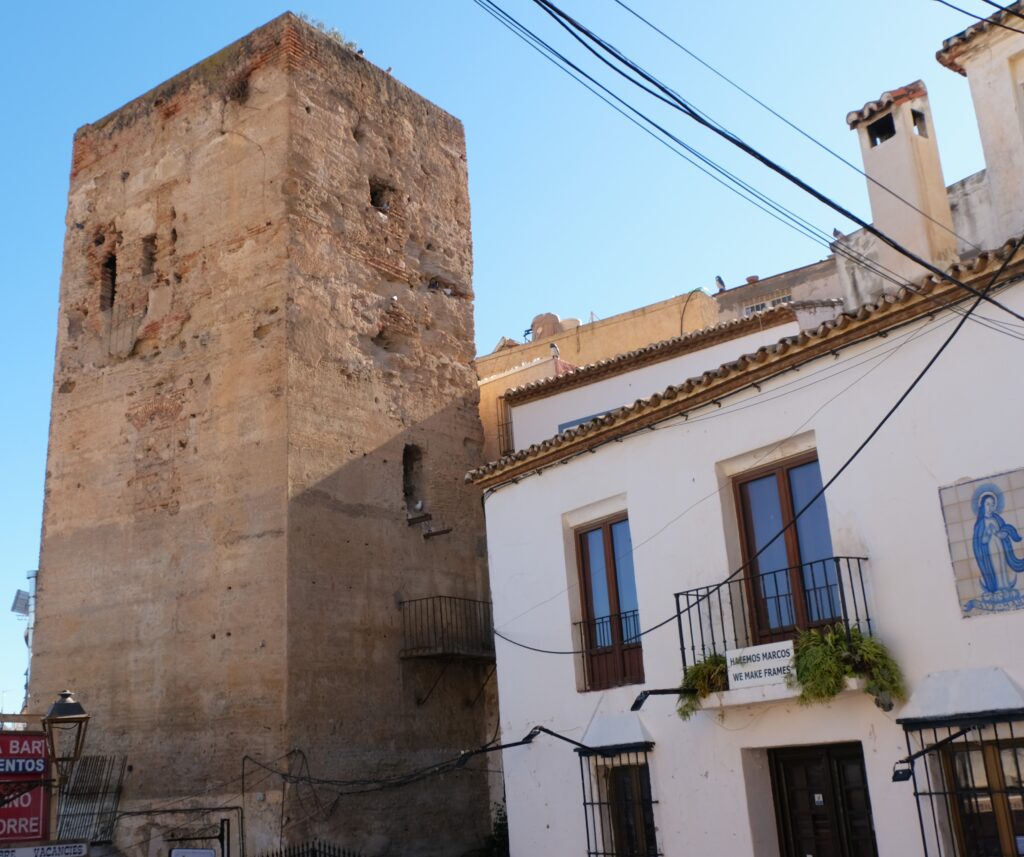
After the conquest by the Catholic monarchs, it was renamed Torre de Pimentel, in honor of a soldier of the crown. It retained the same function until the 18th century: protection from North African piracy
The 16th century was undoubtedly the most terrible period, with Barbarossa. This famous Ottoman corsair was the beylerbey (governor general) of the Regency of Algiers and led attacks on the Andalusian coast to capture people and sell them as slaves in Oran and Algiers.
8 – Statue of Carrete de Malaga
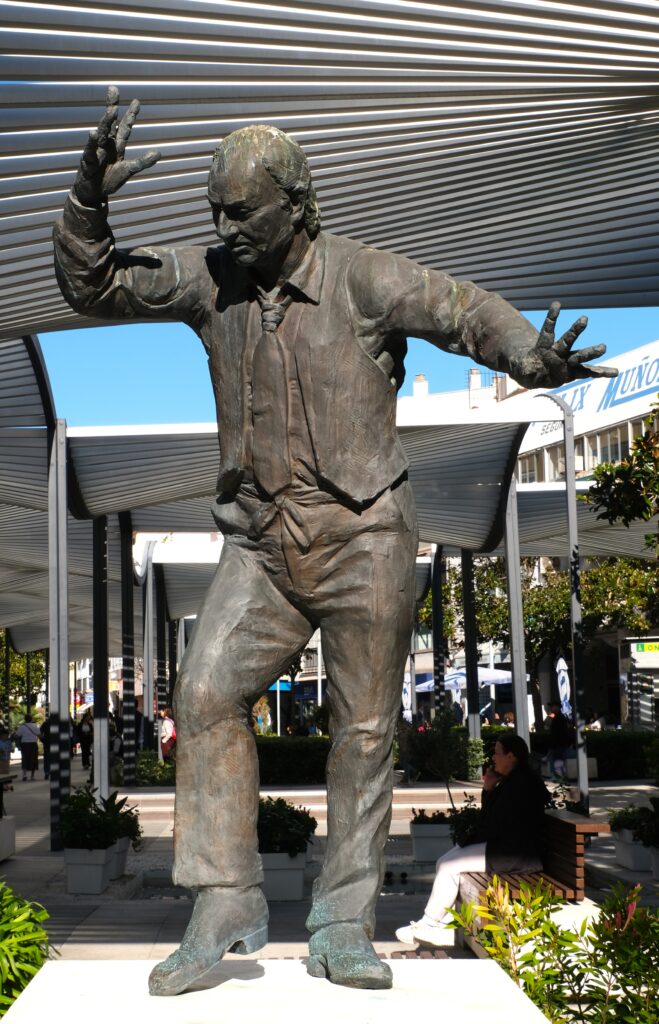
This sculpture is a very personal favorite of mine. I am a fan of flamenco and of the great master of Malaga flamenco, Carrete de Málaga. I had the opportunity to see him on stage in 2023, 2024, and 2025, and enjoyed it just as much each time.

And it’s not every day you get your own statue while you’re still alive!
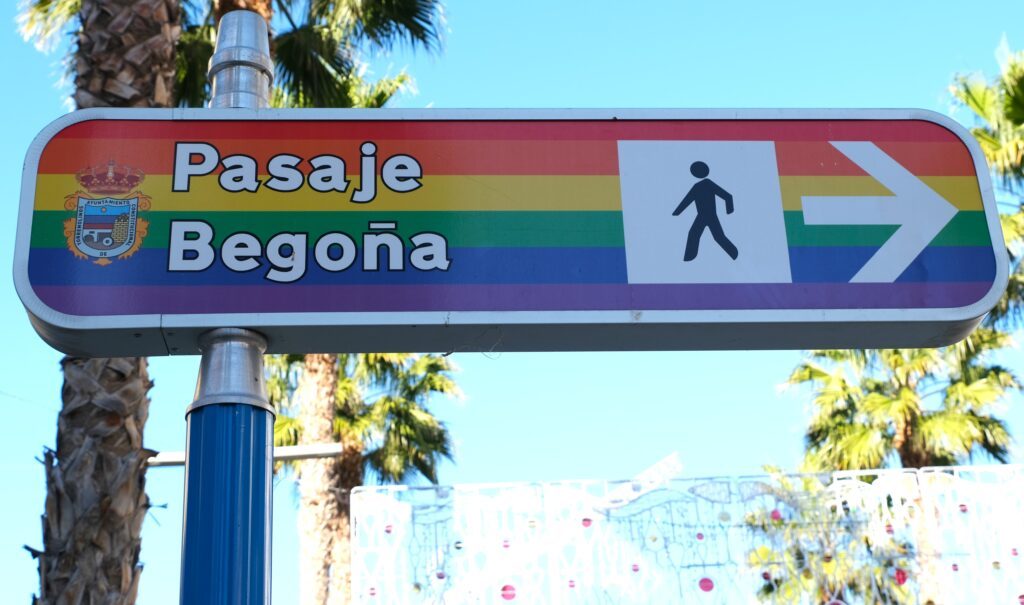
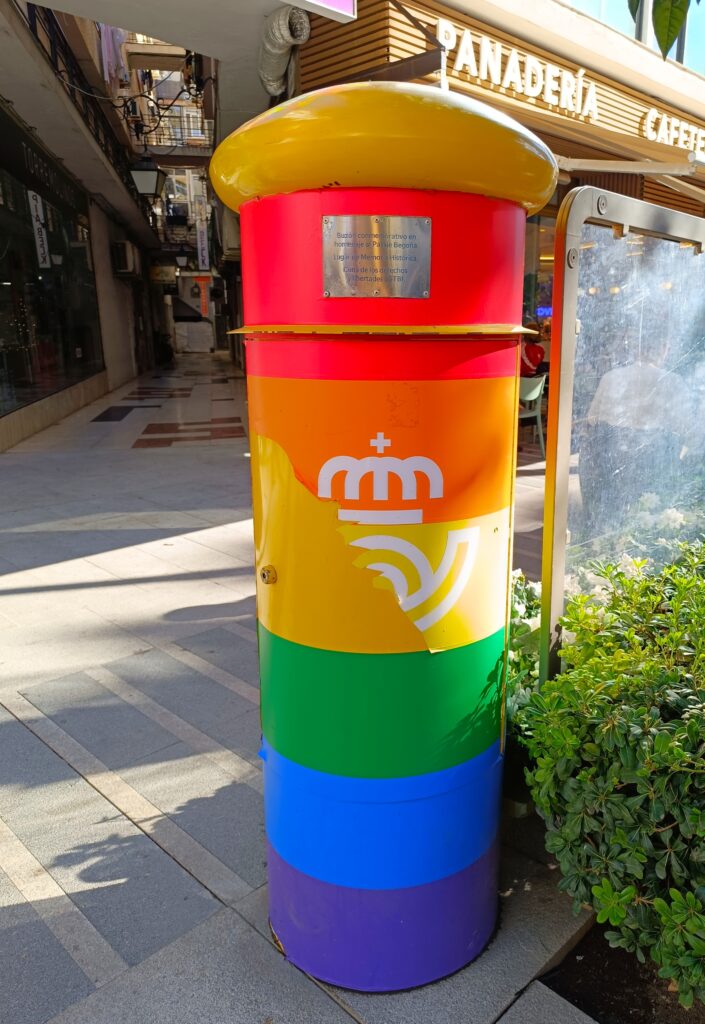
9 – Pasaje Begoña
This is a symbolic and historic place in Torremolinos.
To understand it, you have to go back to the early 1960s and remember the Franco regime of the time and know a few details:
- At that time, Torremolinos became a very international seaside resort with many celebrities coming on vacation (and bringing in foreign currency for the regime).
- Gay tourism was on the rise. In 1962, Tony’s Bar, Spain’s first gay bar, opened its doors. In 1968, Spain’s first lesbian bar also opened in the La Nogalera neighborhood.
- The authorities were permissive towards extravagance, homosexual relationships, and drugs in Torremolinos. In the 1960s, the town was even nicknamed “Little New York” or “El No Lugar” (The No-Place) by locals.
However, the Franco regime eventually took a stand against all these “extravagances” and denounced what it saw as a den of perversion.
On June 24, 1971, two police vans were stationed at the entrances to the Begoña passageway and rounded up all the homosexuals and hippies in the area, a total of 120 people. This operation was nicknamed the “Gran redada.” They also closed several nightclubs.
Finally, the next day, the foreigners were deported to their countries and the Spaniards were imprisoned.
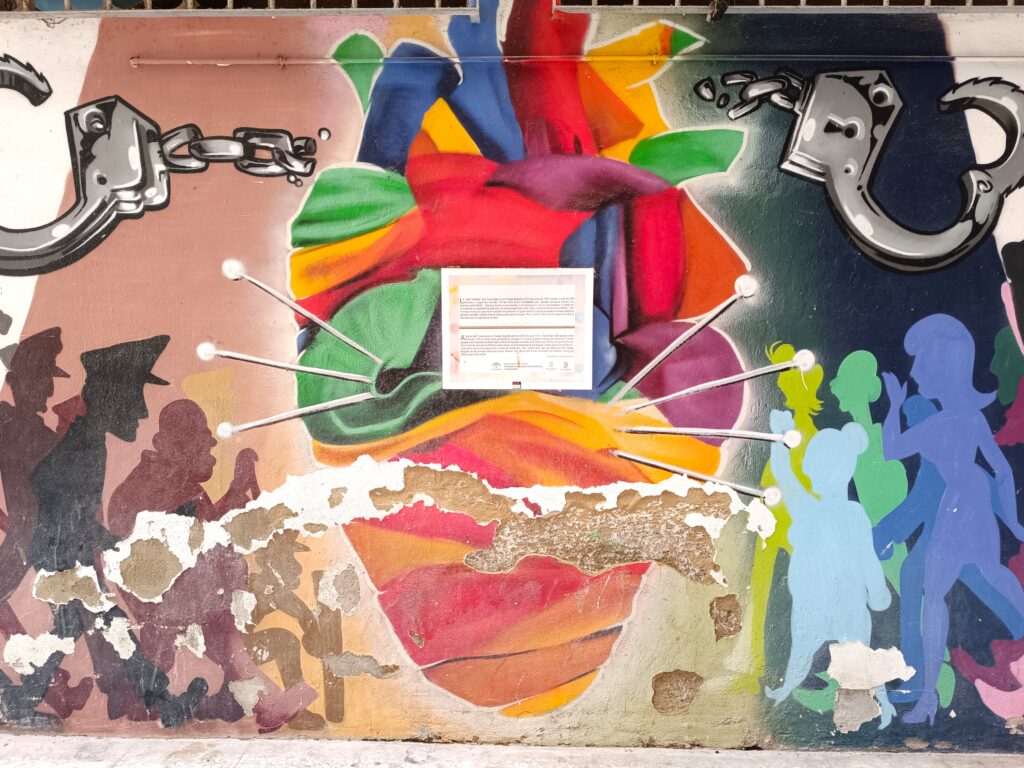
But this news spread around the world, even making the front page of The Sunday Times (Tourists held in nightclub raids in Spain) and Der Spiegel. A few days later, everyone was released (many of them went to Ibiza).
Today, Torremolinos is one of Europe’s leading gay-friendly destinations. The most representative neighborhood is Barrio de La Nogalera.
10 – Le Mercadillo de Torremolinos
The Torremolinos market, or mercadillo, is a very lively place. It is held on Thursdays from 9 a.m. to 2 p.m. in the recinto ferial. It is also a good way to discover local life.
11 – Street art in Torremolinos

Torremolinos offers visitors many murals. We saw some of them in the introduction to this article, depicting famous people: Brigitte Bardot, Ava Gardner, John Lennon, and Paco de Lucía.

However, you can also discover other murals and street art depicting celebrities such as Frank Sinatra, Dalí, Picasso, Spike Lee, and Anthony Hopkins.
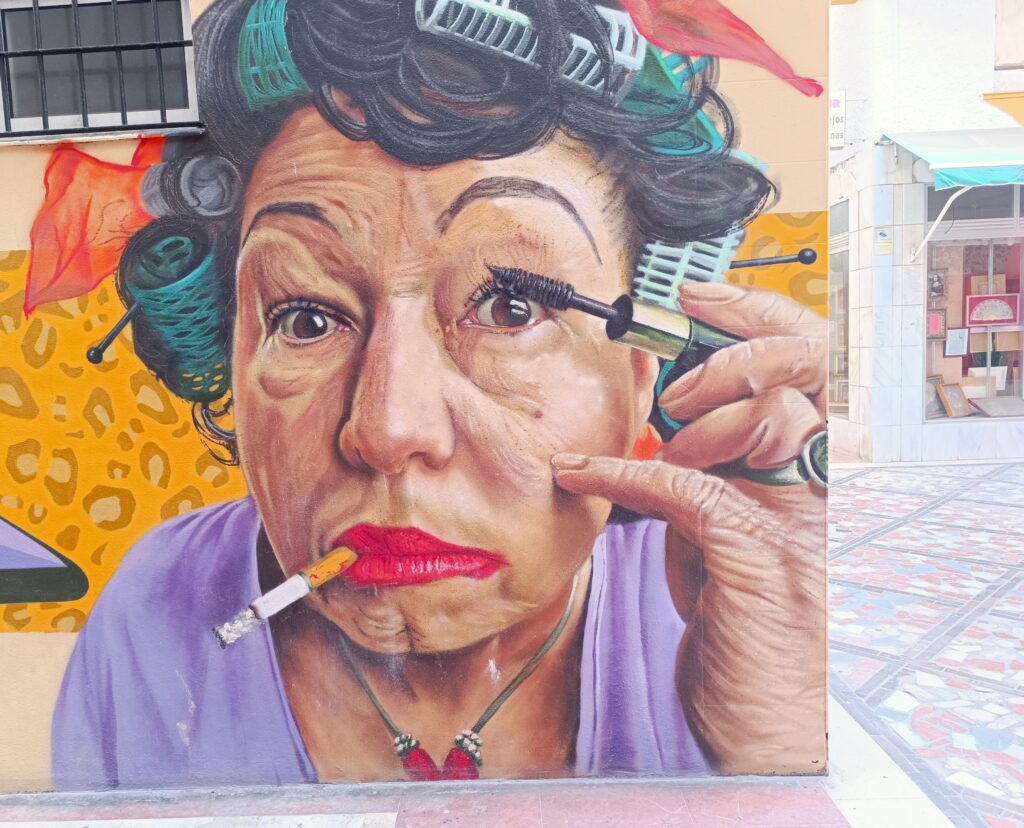
Torremolinos has several works of street art that are worth seeing during your walks around town.
Guided tours departing from Torremolinos
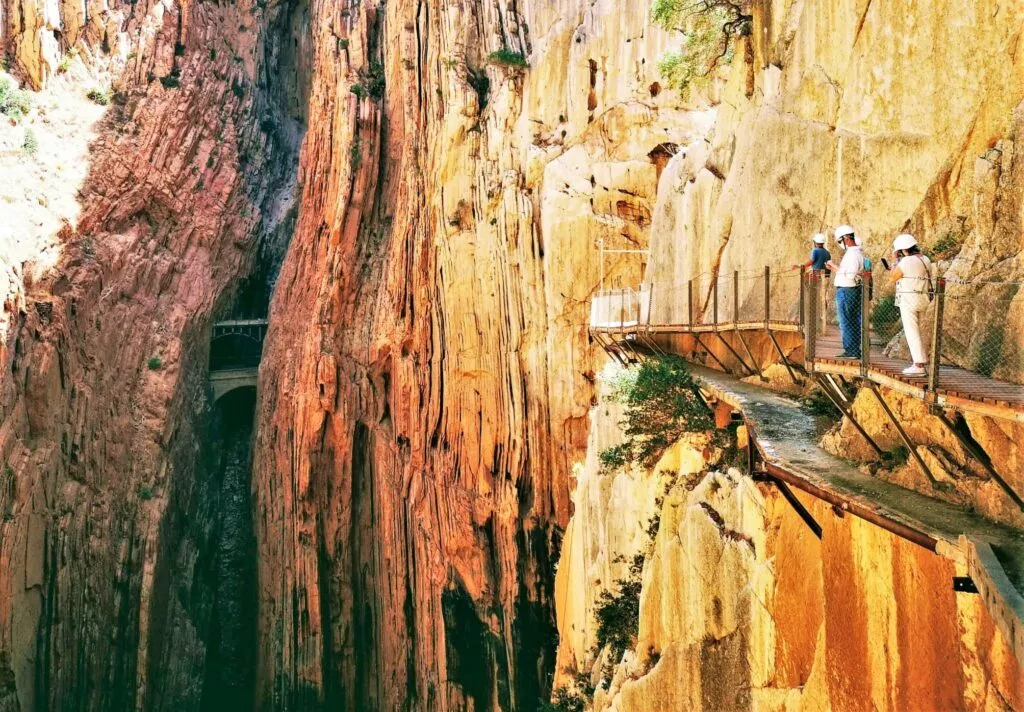
There are nine magnificent excursions available from Torremolinos:
- Excursion to Caminito del Rey
- Tour of Ronda and Setenil de las Bodegas
- Excursion to Nerja and Frigiliana
- Visit Mijas and Marbella
- Excursion to Granada and the Alhambra
- Guided tour of Seville and the Alcazar
- Excursion to Cordoba and the Mezquita
- Book a day trip to Morocco, to Tetouan
- Excursion to Gibraltar
You can view details, prices, and book these 9 excursions from Torremolinos online.
What to do in Torremolinos?
Below are a number of ideas for activities to do in Torremolinos. You can book them online today.
Bonus: all activities can be canceled up to 24 hours before the scheduled date.
One of the most popular activities around Torremolinos is dolphin watching boat trips. This is a wonderful opportunity to see dolphins in the wild from a catamaran or other type of boat. You can book the trip online using this link.
If necessary, you can also get a quote for a taxi transfer to Malaga airport.
Booking accommodation
Below, you will find all the hotels and accommodation available in Benalmadena, after selecting your dates:
Map of Torremolinos with places to visit mentioned in the article
Where to have lunch in Torremolinos?
On the Plaza de la Gamba Alegre (the happy shrimp)

This little square called La Gamba Alegre is one of my favorite places. It’s tucked away not far from Calle San Miguel, and there’s a little restaurant called La Gamba Alegre that serves traditional tapas. It’s mostly frequented by locals, who speak Andalusian Spanish, which means they speak loudly 🙂
As a side note, there used to be a crêperie here where Brigitte Bardot and Lino Ventura came to lunch in 1971. It was during the filming of the movie Boulevard du rhum.
On this square, there is also the Taberna flamenca Pepe Lopez where you can see a flamenco show.

La Campana Bar
Here is a typical and authentic bar located at Calle de la Cruz, 3. Here, it’s old-fashioned: the bill is written with chalk directly on the counter :).
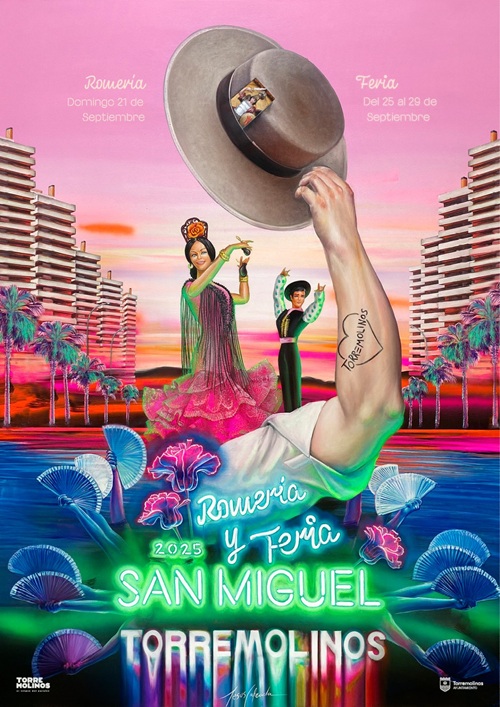
The Feria de Torremolinos in September
Some useful links
- A map of Andalusia. It is an interactive map; simply click on each city to see the best places to visit.
The latest articles on Andalusia

What to do in Motril? Visit La Lonja and see the fish auction.
You will find essential information on what to do and see in Motril. Don’t miss the best things to do and see during your stay.

What to do and see in Soportujar, the village of witches?
You will find essential information on what to do and see in Soportujar. Don’t miss the best things to do and see during your stay.

What to do in Gibraltar? Must-sees and activities
You will find essential information on what to do and see in Gibraltar. Don’t miss the best things to do and see during your stay.

Benalmadena What to do and see ? Activities and must-sees
You will find essential information on what to do and see in Benalmadena. Don’t miss the best things to do and see during your stay.
